Inframammary (IMF)
Placed in the crease beneath the breast. Offers the most direct access and the most precise placement; the most common approach.
Plastic Surgery
Volume, shape and proportion — planned around your anatomy
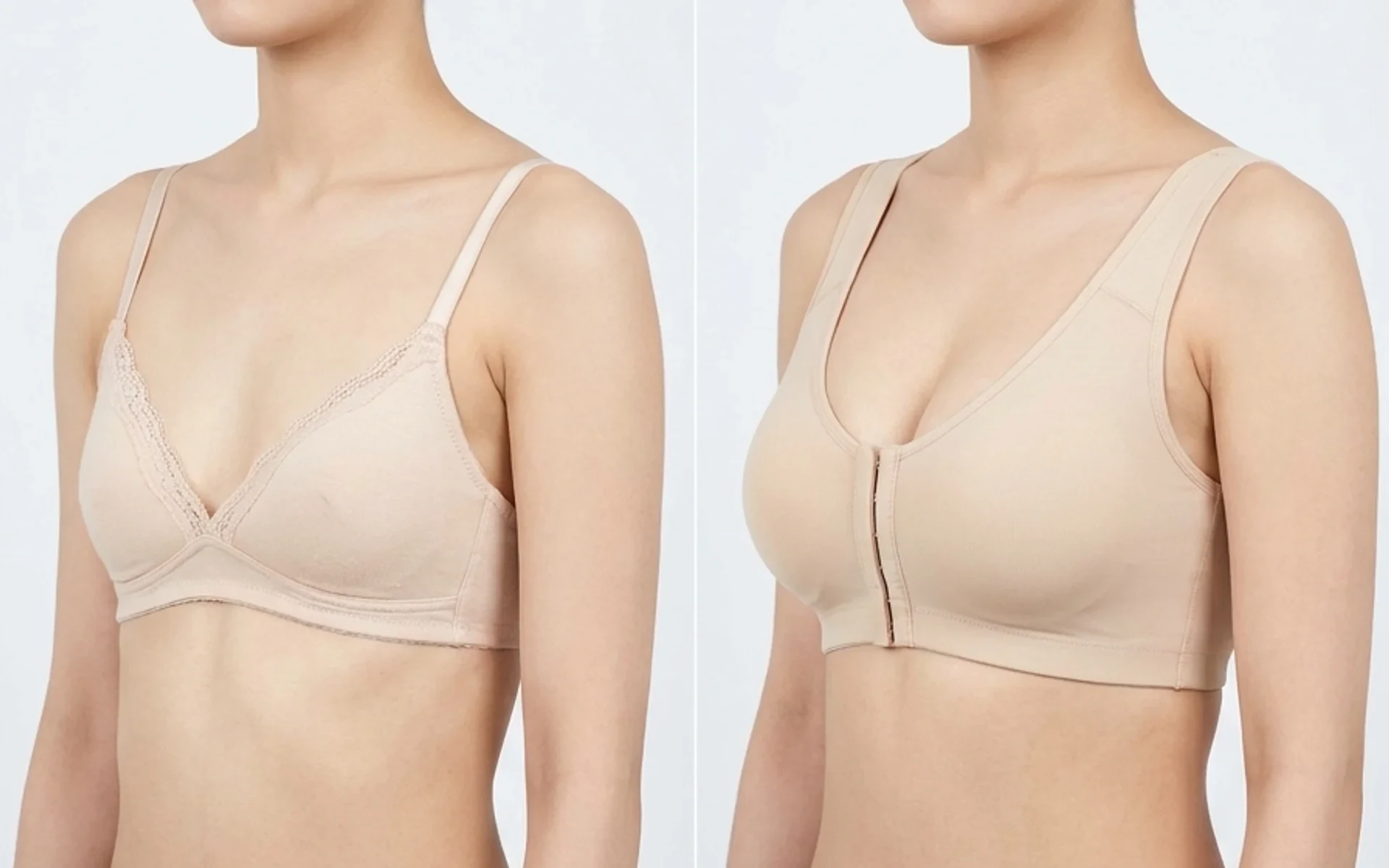
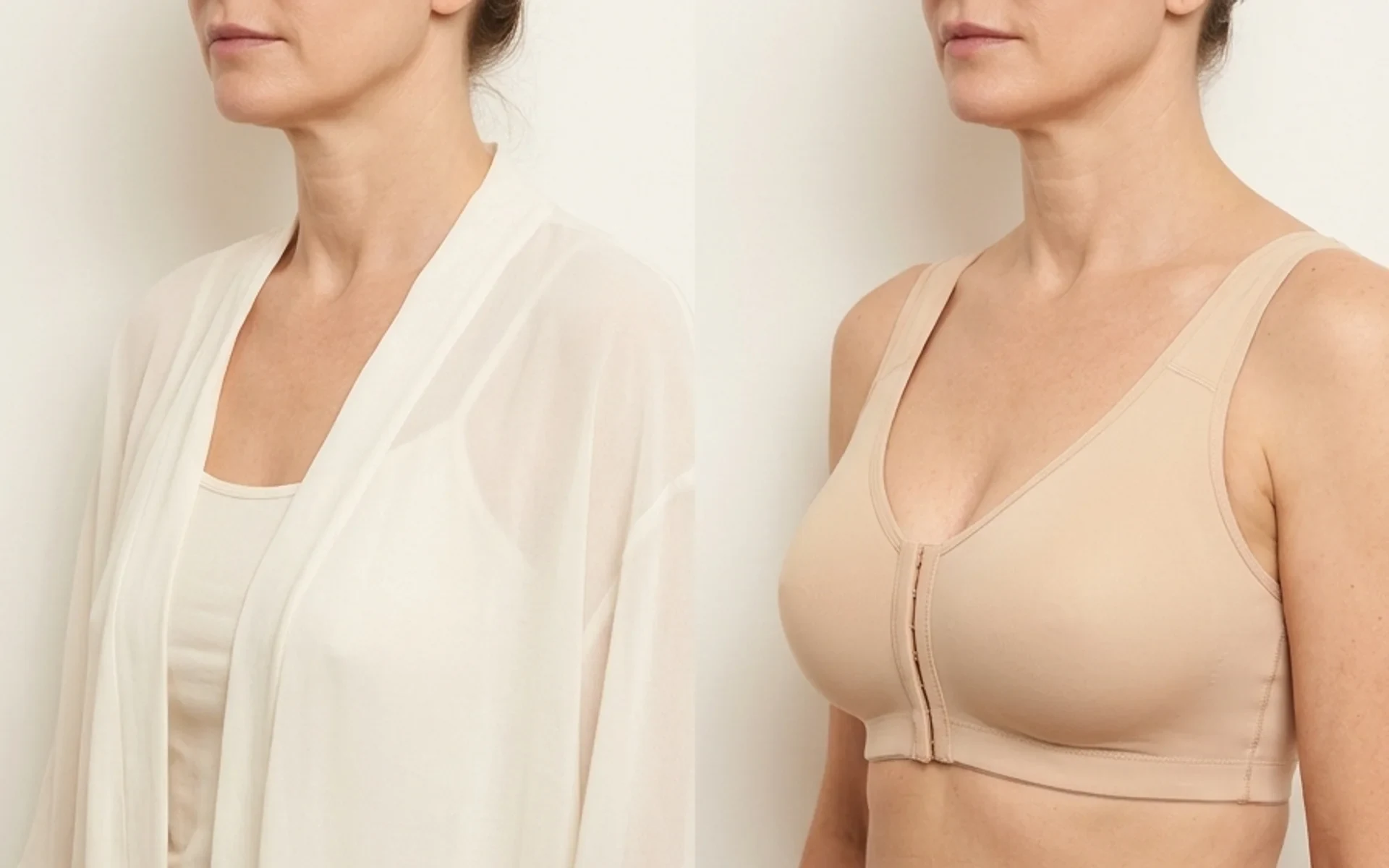
Notice: To protect patient privacy, the images shown are based on photographs of actual patients; however, identifying features have been modified using AI retouching technology. These images are provided solely to aid understanding of surgical outcomes and may differ from actual photographs. Individual results may vary.
Increases breast volume and improves symmetry using implants or autologous fat transfer — grafting fat taken from another area of the body.
Removes excess skin and tightens the surrounding tissue to elevate drooping breasts and reposition the nipple-areolar complex higher on the chest wall. On its own it does not add significant volume.
Removes excess glandular tissue, fat and skin to reduce breast size, relieve physical discomfort such as back and neck pain or skin irritation, and create a proportional contour.
Where the incisions are made, and where the scars will sit
Placed in the crease beneath the breast. Offers the most direct access and the most precise placement; the most common approach.
Made around the lower border of the nipple and areola. Hides scars well along the colour transition, but carries a slightly higher risk of duct or nerve disruption.
Hidden in the armpit fold. Leaves no scar on the breast itself, but requires specialised endoscopic instruments and makes precise pocket adjustment harder.
The implant sits directly behind the breast tissue and in front of the pectoral muscle. Faster recovery, but less coverage in thin patients, which raises the risk of visible implant edges or rippling.
The implant sits partially or fully behind the pectoralis major. Gives better soft-tissue coverage, reduces the risk of capsular contracture and produces a more natural transition along the upper slope.
Modern surgical technique has significantly reduced complication rates, but every surgical intervention carries inherent risks that deserve careful consideration.
Scar tissue forms around the implant and tightens around it, making the breast feel firm, tight or painful. This is the most common reason for revision surgery.
Saline implants deflate rapidly and visibly. Silicone ruptures quietly — a silent rupture — and needs imaging to detect.
Temporary or permanent numbness or hypersensitivity in the nipple or breast tissue.
Structural shifts in which the implants merge across the sternum (symmastia) or slide below the inframammary crease (bottoming-out).
Breast implant-associated anaplastic large cell lymphoma — a rare cancer of the immune system linked primarily to textured-surface implants. Smooth implants carry a substantially lower risk.
Implants can obscure breast tissue, so routine breast cancer screening requires specialised displacement views.
The recovery timeline after breast surgery — augmentation, reduction or mastopexy — depends on the surgical approach and on where the implant is placed. Subpectoral dual-plane placement usually needs slightly longer than subglandular placement or pure fat transfer. Most procedures follow a standard phased protocol.
This is a general protocol. Your surgeon will adjust it to the procedure performed and to how your recovery progresses.
Get in touch