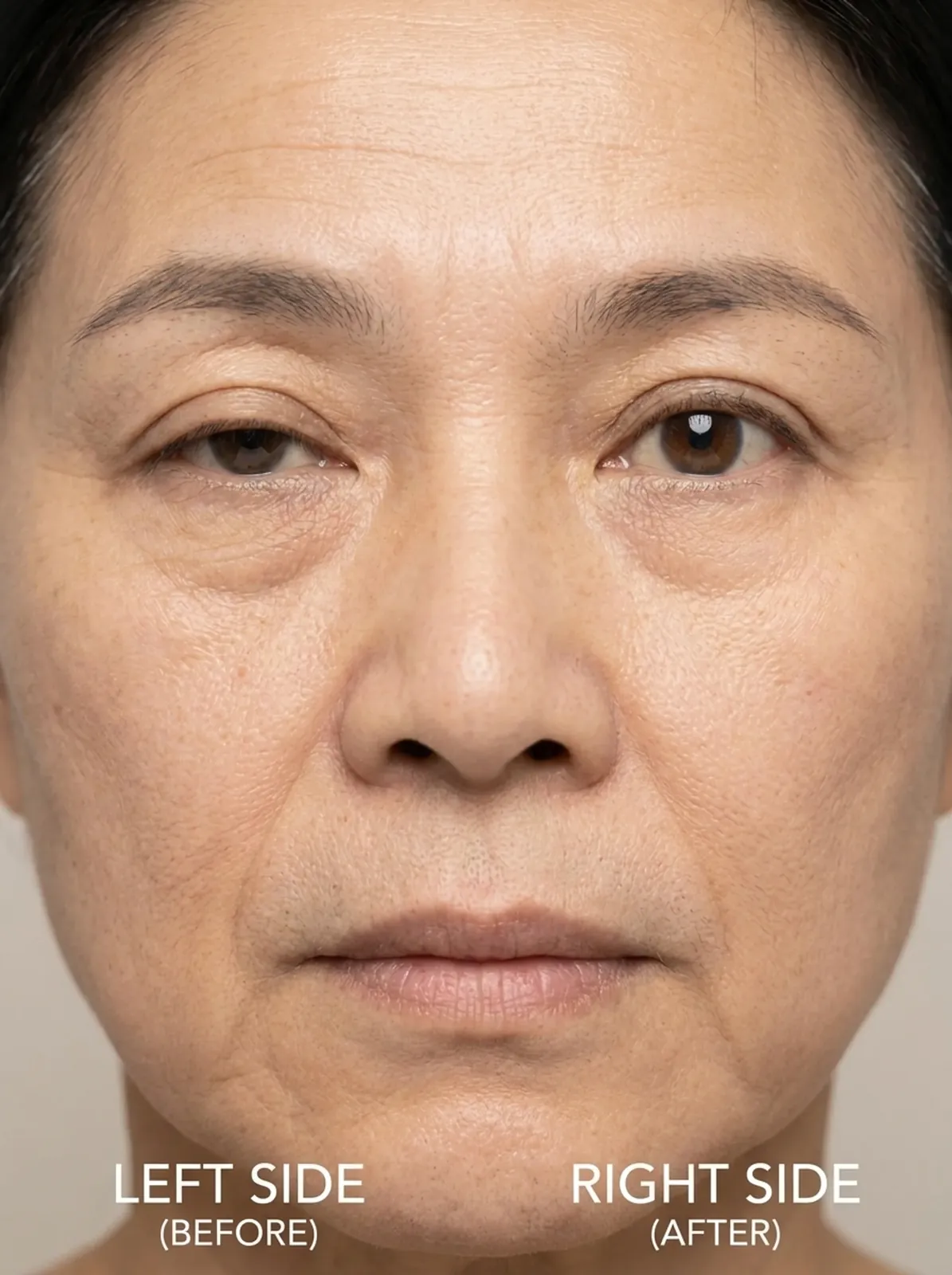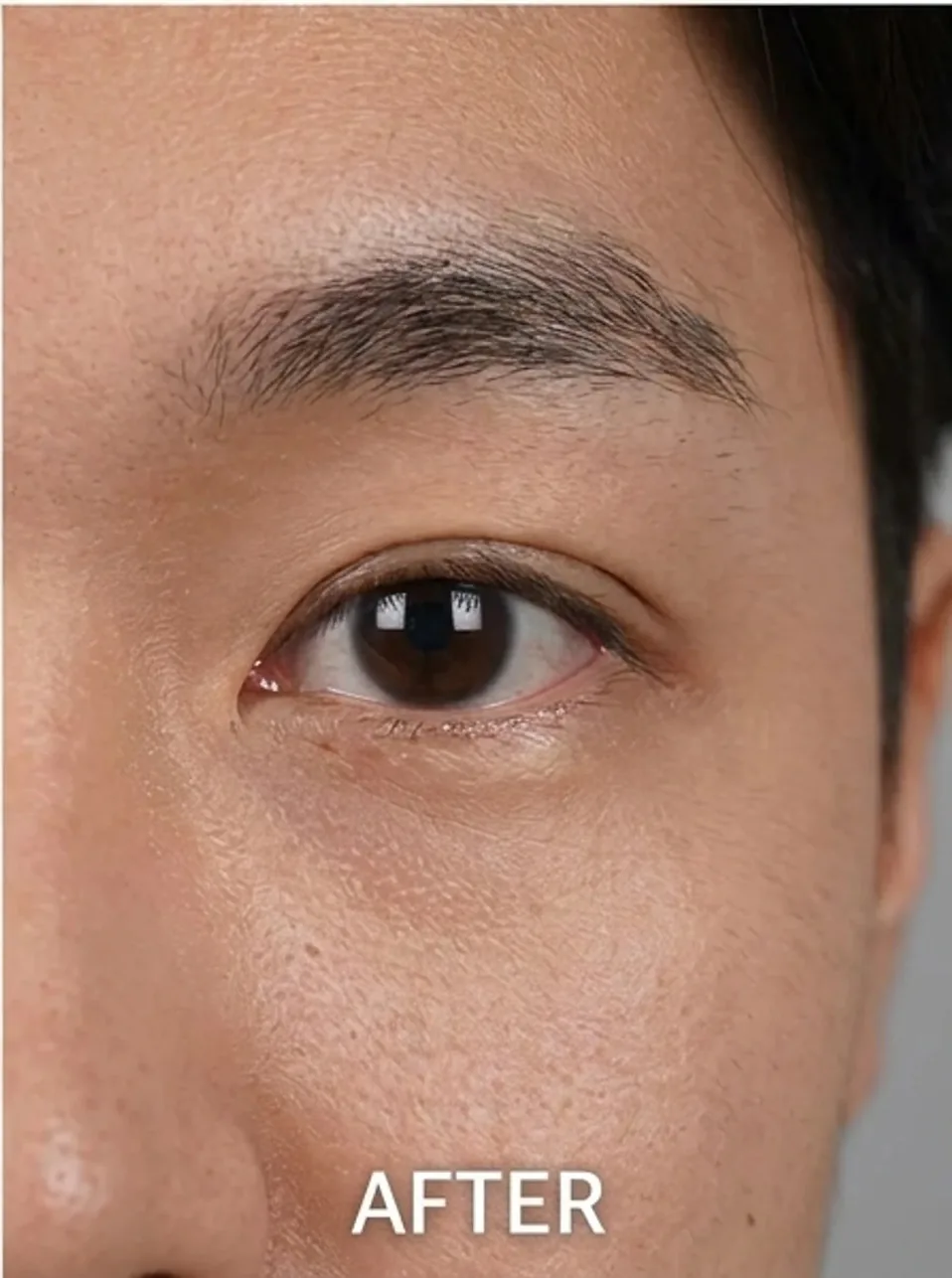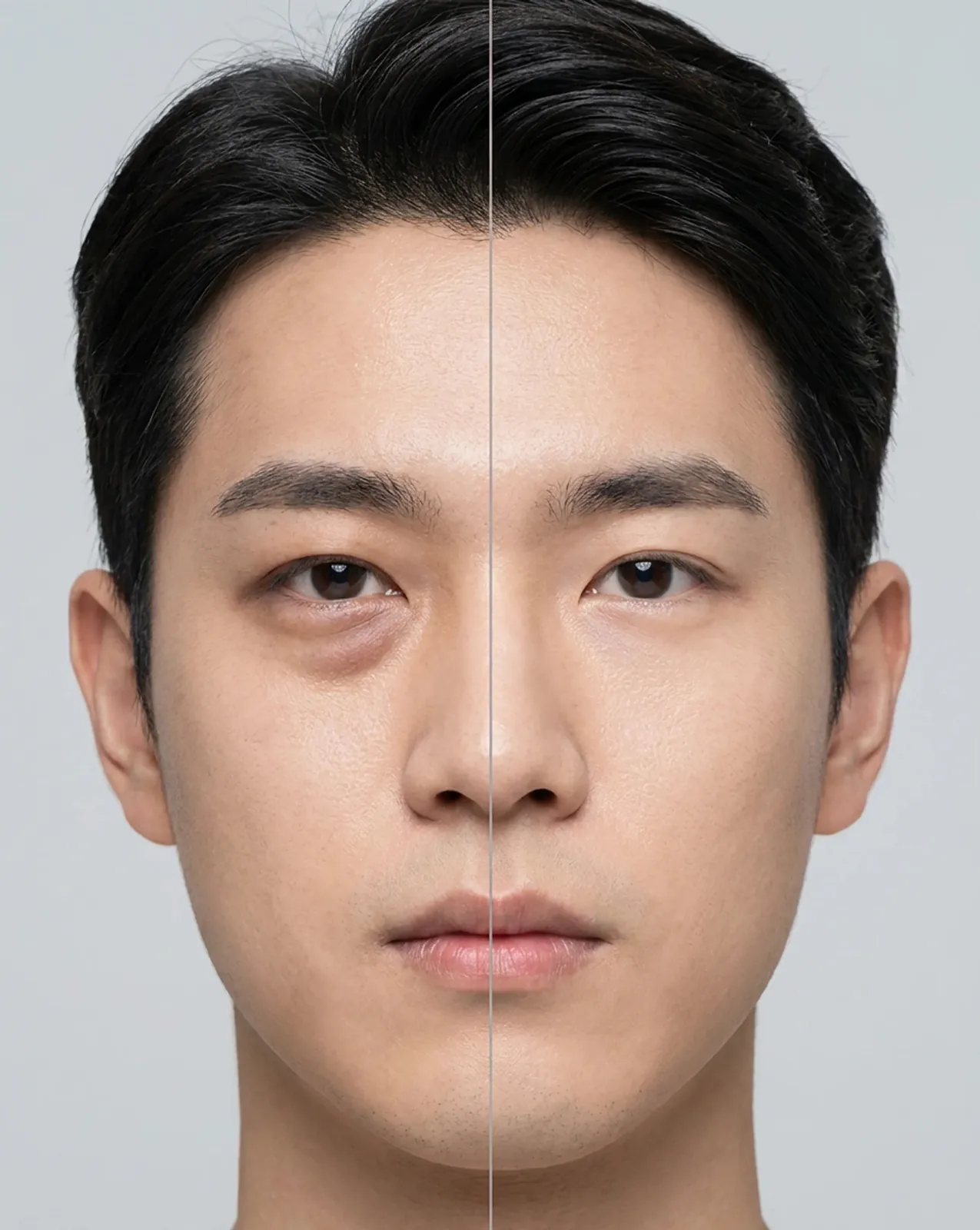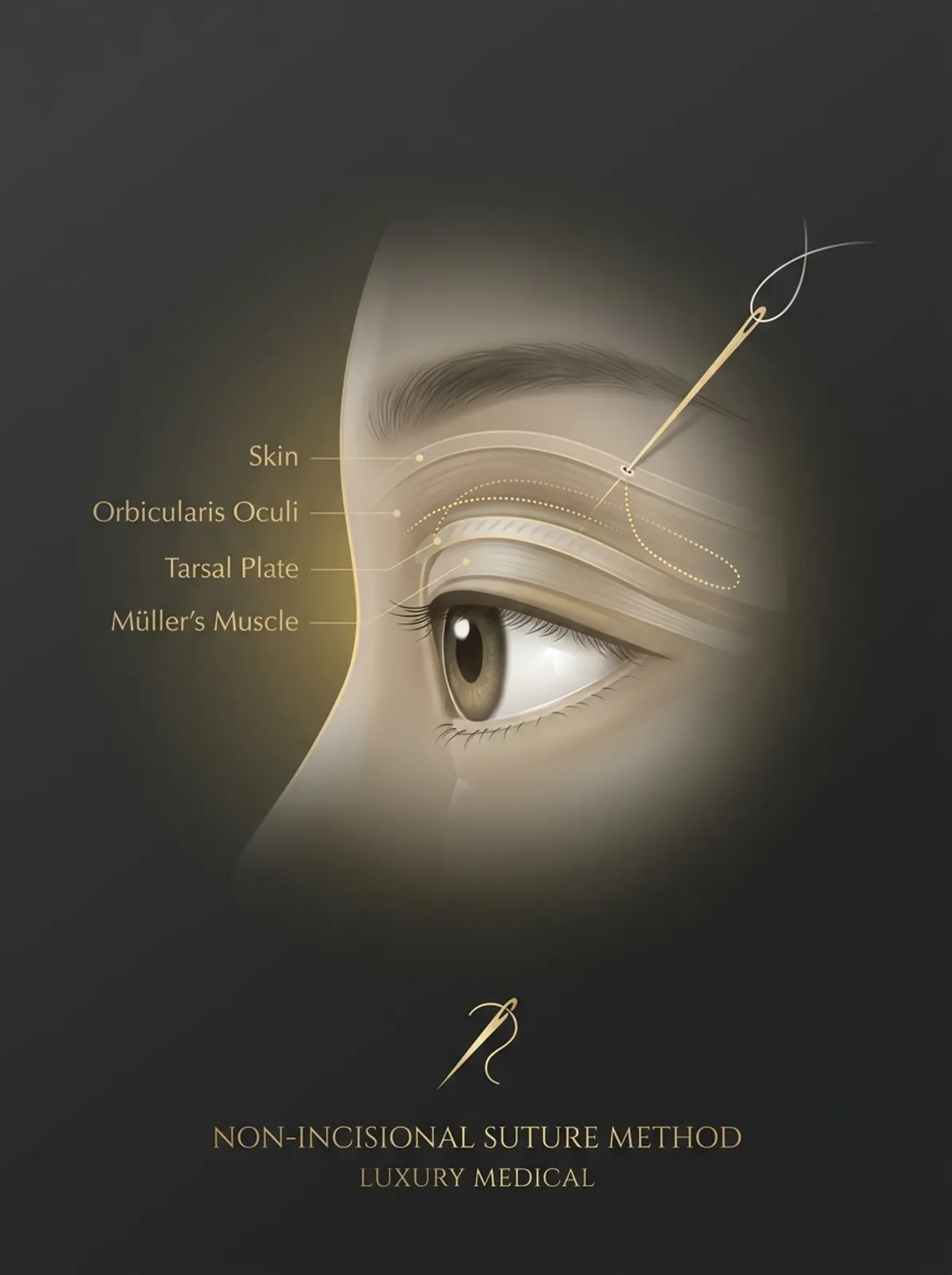
Non-incisional (buried suture)
Fine sutures form the crease with no cut — minimal swelling and a quick recovery for thin, elastic lids.
DowntimeVery shortScarsNone
Eye Surgery
쌍꺼풀 수술
A crease that looks like it was always there — sized to your eye, not stamped from a catalogue.
Double-eyelid surgery creates a defined supratarsal crease that makes the eye look larger and brighter and the lash line more visible. The crease can be formed by a non-incisional buried-suture method for thin lids or a partial/full incision when there is excess skin or fat. The height and shape are designed to your eye — in-fold or out-fold, low or high — so the result suits your face rather than following a single fashionable line.
Individual results vary; images are shared with patient consent.
Notice: To protect patient privacy, the images shown are based on photographs of actual patients; however, identifying features have been modified using AI retouching technology. These images are provided solely to aid understanding of surgical outcomes and may differ from actual photographs. Individual results may vary.
Fine sutures form the crease with no cut — minimal swelling and a quick recovery for thin, elastic lids.
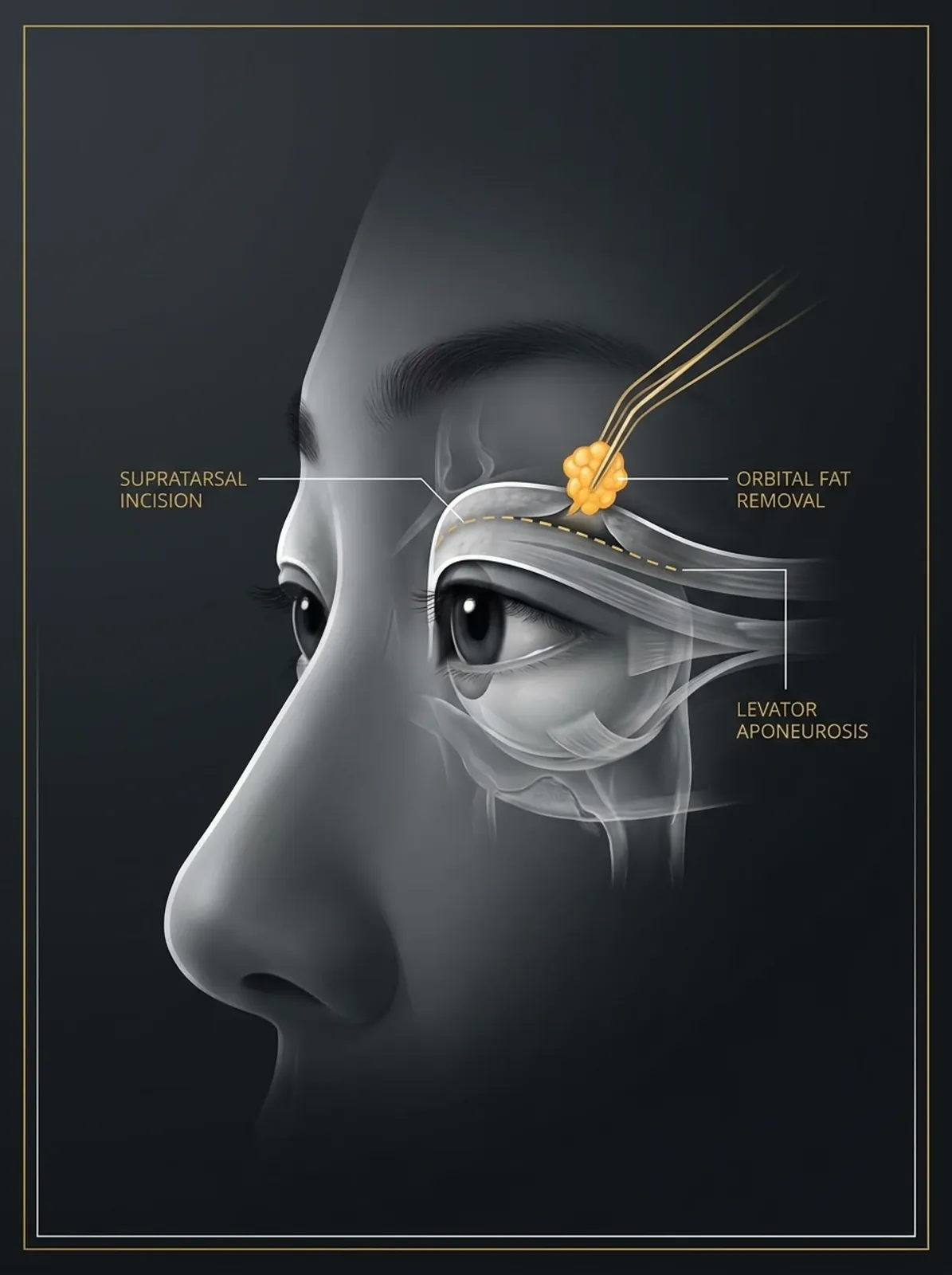
A short incision refines the fold and removes a little fat — a balance of durability and fast healing.
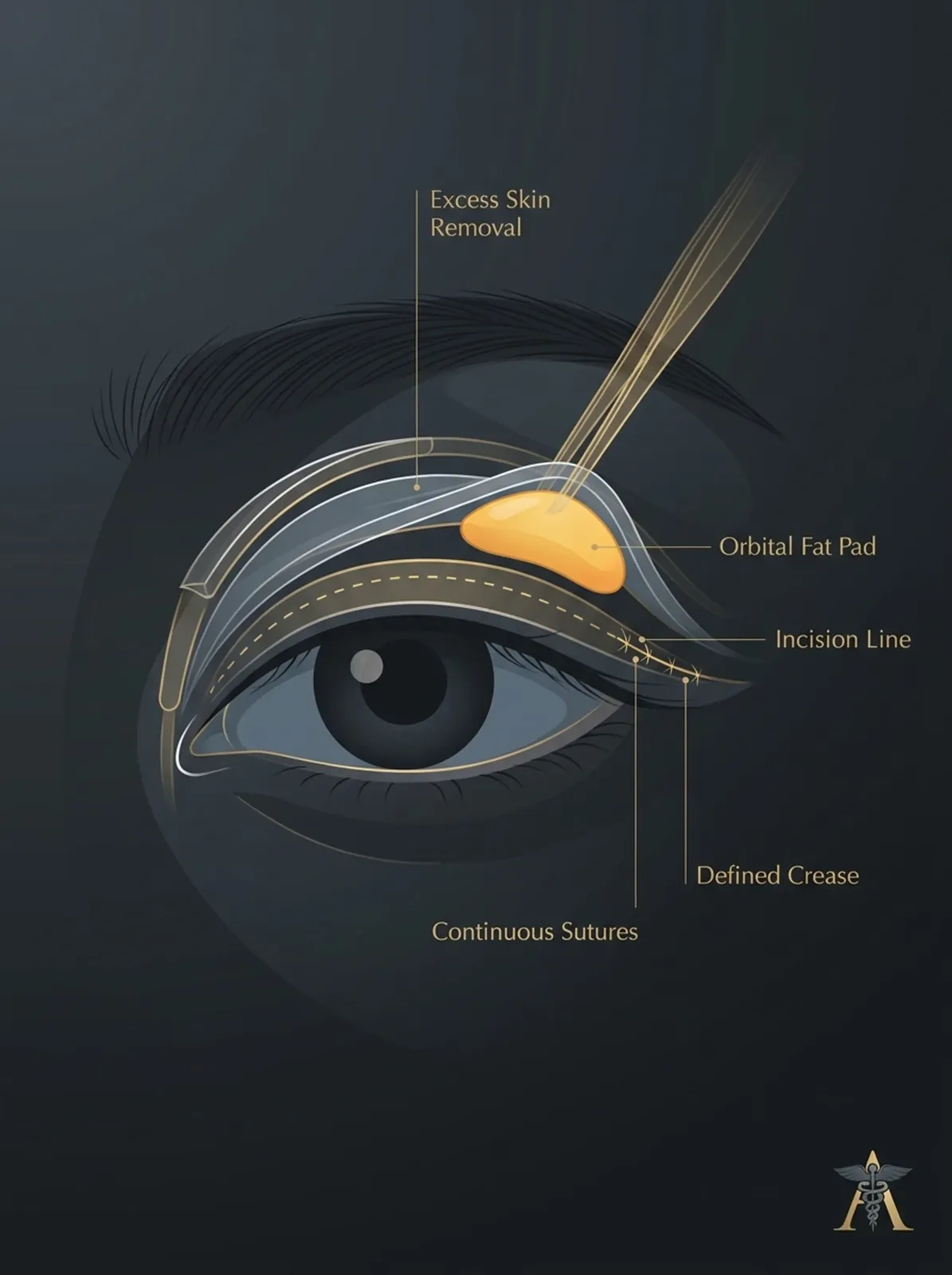
For thicker lids or excess skin — a clearly defined, long-lasting crease with skin and fat sculpting.
The most appropriate technique depends on your eyelid anatomy, skin thickness, the amount of excess tissue, and your aesthetic goals. During your consultation, our surgeon will recommend the approach that provides the most natural, balanced, and long-lasting result while preserving harmony with your facial features.
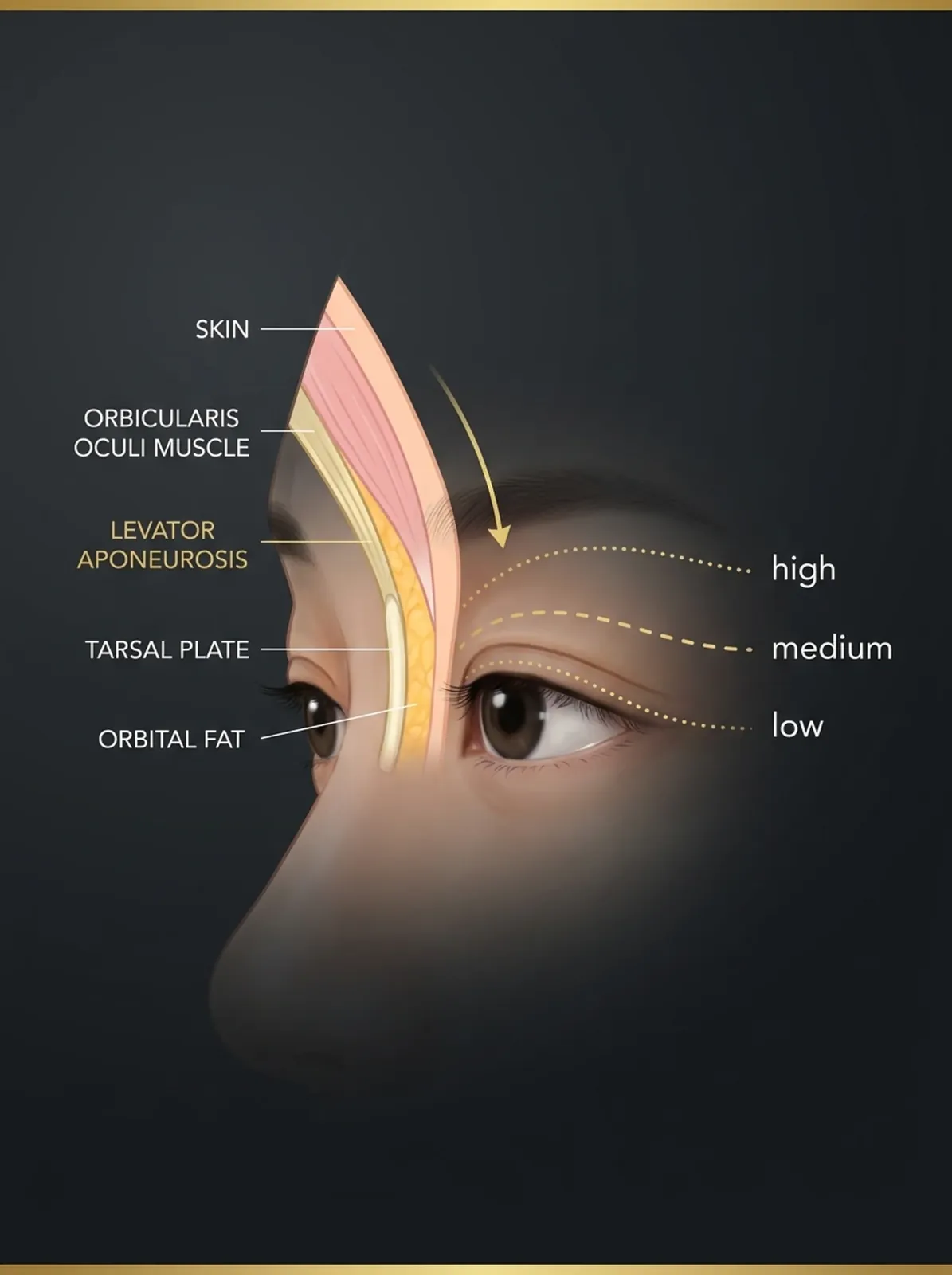
Height and fold type are chosen for your anatomy, so the crease looks native, not applied.
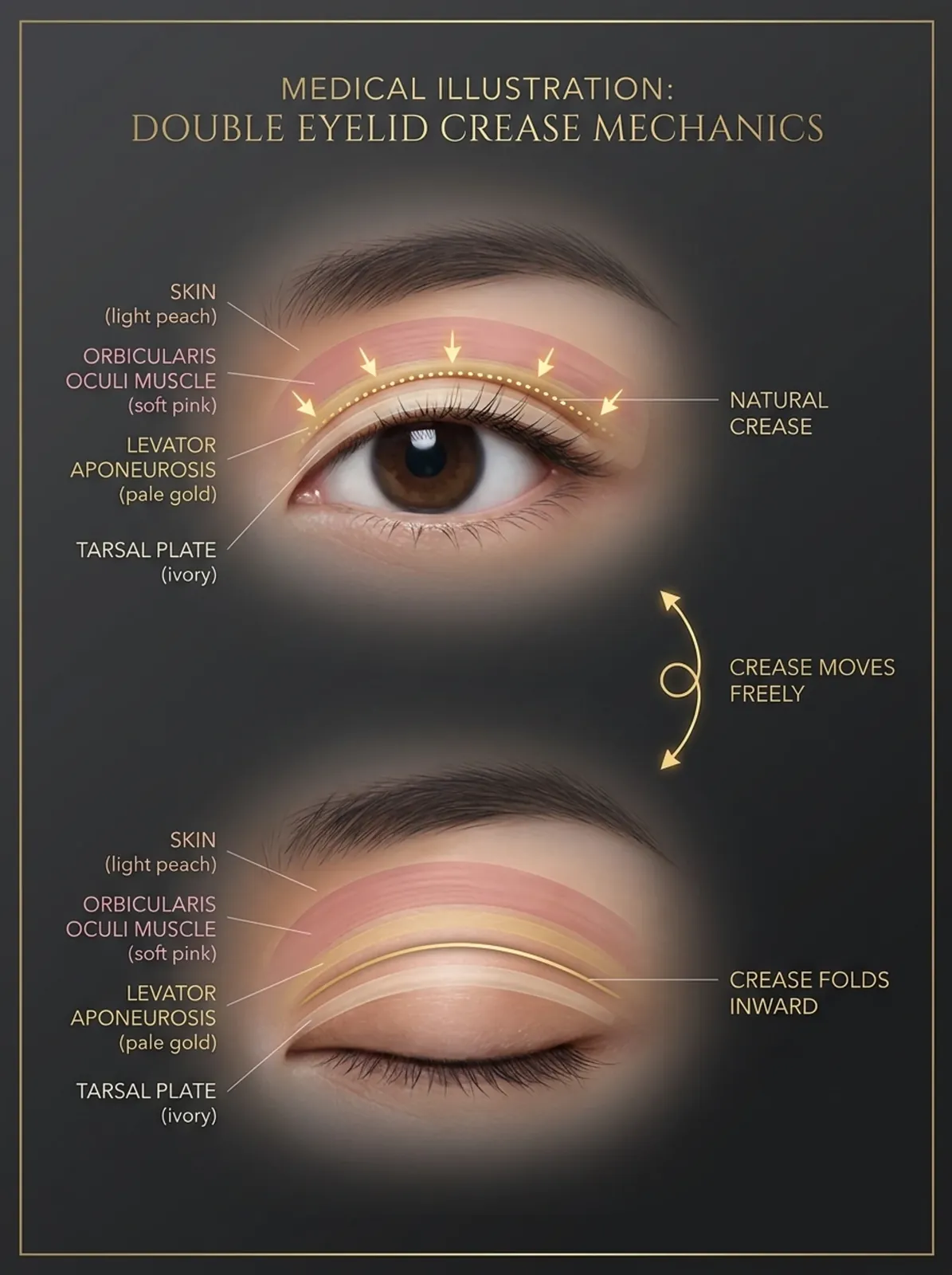
We test the crease with your eyes open and closed so it behaves naturally when you blink and smile.
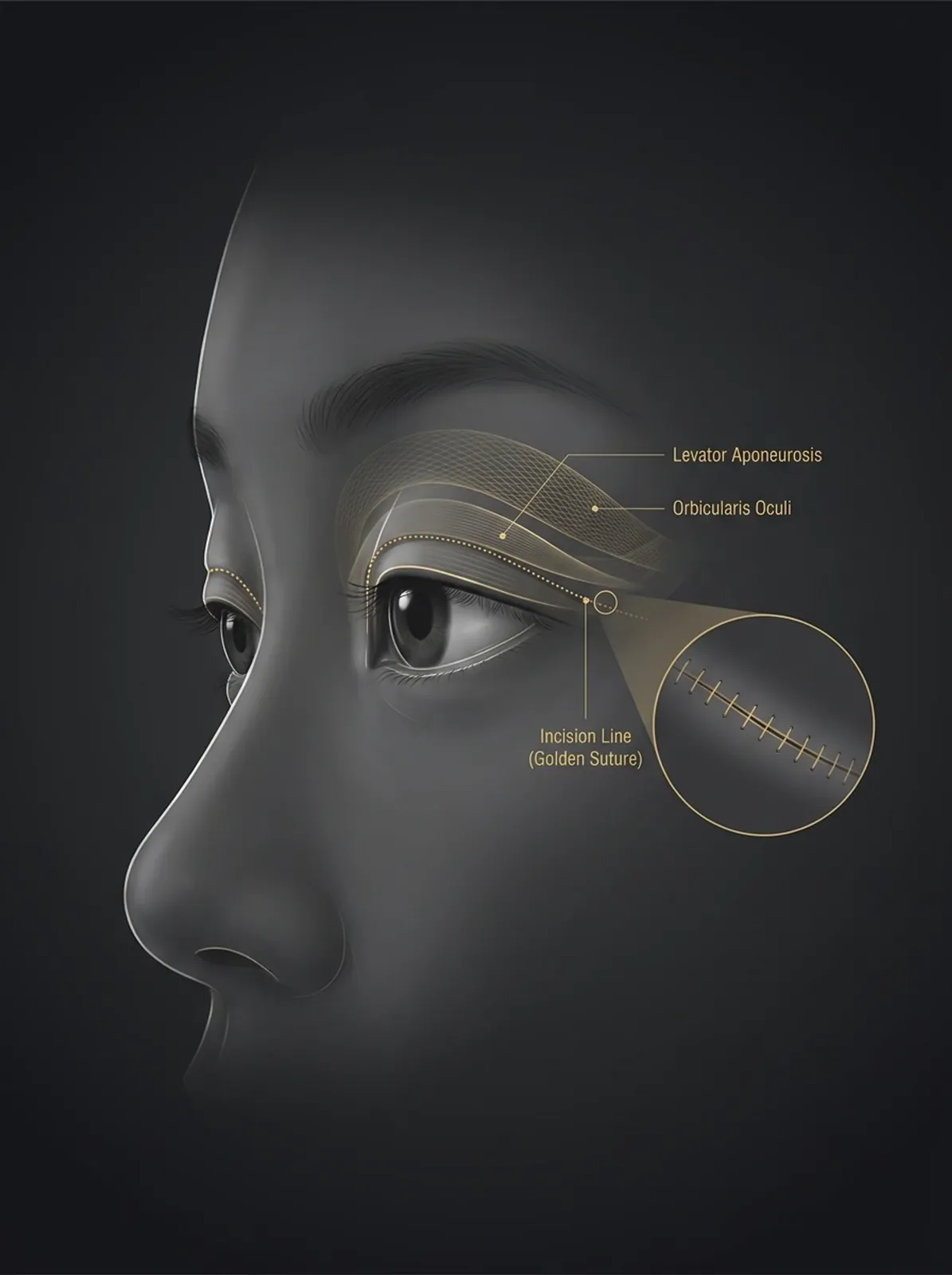
Fine suturing and precise fat handling keep the line clean and quick to settle.
| Procedure time | 40–60 minutes |
|---|---|
| Anesthesia | Local with light sedation |
| Downtime | 5–7 days (suture removal) |
| Results settle | 1–3 months |
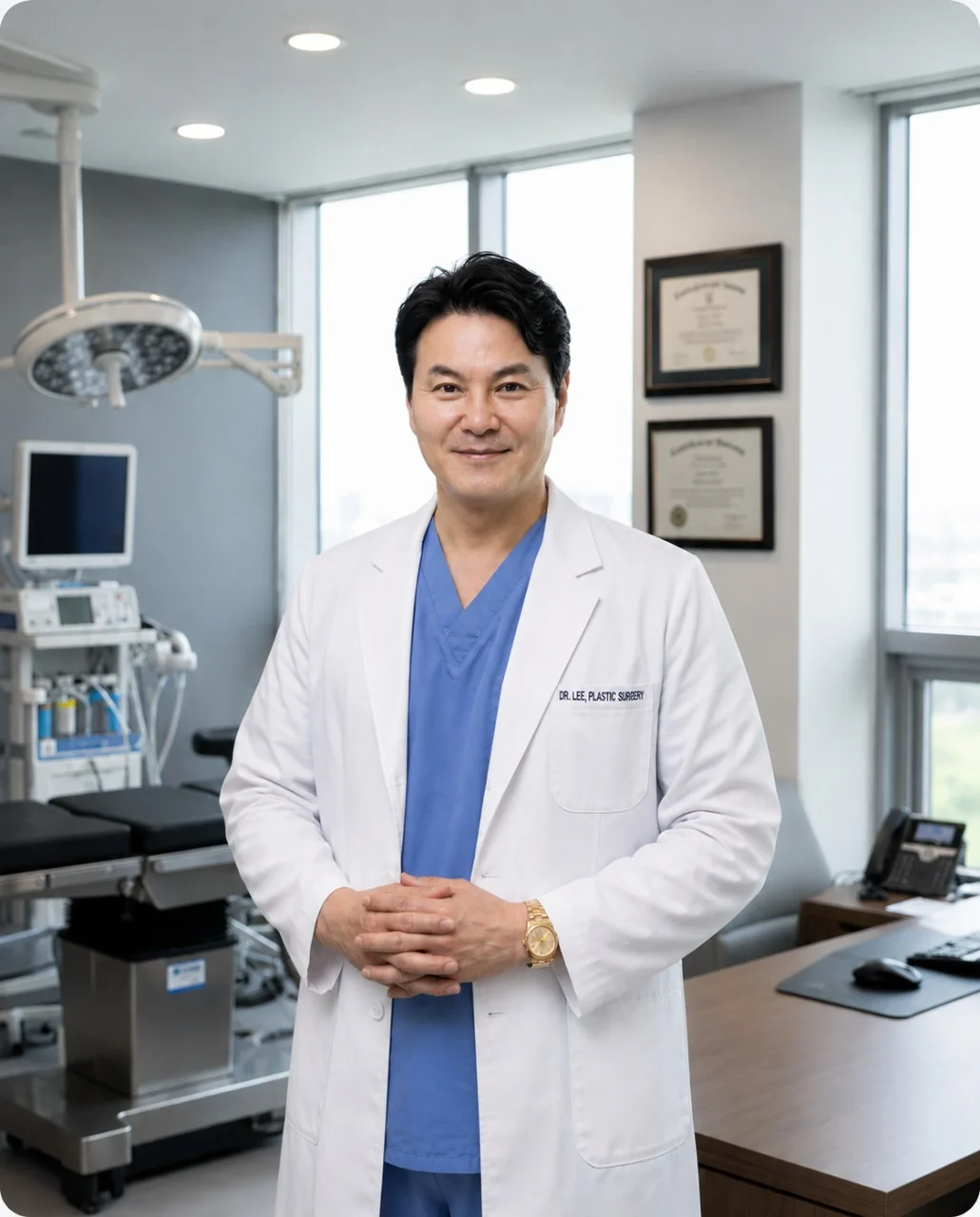
The eyes are where a face first speaks. I design a crease you forget is there — one that simply makes you look awake and like yourself.
Sangwon Lee, M.D., PhD.
Board-Certified Plastic Surgeon

An eye should welcome light, not fight it. That is the measure I care about most.
Daeyoung Kim, M.D., PhD.
Board-Certified Plastic Surgeon
Facial-proportion mapping and an unhurried 1:1 discussion of your concerns and goals.
A plan drawn to your own anatomy and facial balance — never a template.
The chosen method forms the crease under local anesthesia with light sedation for comfort.
Scheduled reviews as swelling settles and the result matures.
The crease height and shape are designed to your eye and tested in motion, so it reads as a natural fold rather than a fixed line.
Thin, elastic lids often suit the non-incisional method; thicker lids or excess skin are better served by a partial or full incision.
Get in touch