Cejong

Face Lifting

A tailored approach to sagging — a surgical lift of the deeper layer that descends with age.

Face Lifting
Cejong Clinic content team

At a glance

Anaesthesia
Sedation
Surgery time
About 3–4 hours
Hospital stay
Same-day discharge
Stitch removal
About 7 days
Back to office work
About 3–5 days
Exercise
After about 4 weeks

Typical, approximate figures — they vary with each person and the extent of surgery. Your own schedule is explained at the consultation.

What is checked at a facelift consultation in Gwangju?

A facelift consultation reviews at which layer (skin, SMAS, neck) the sagging has progressed and how far, together with skin elasticity, overall facial proportion, health and lifestyle. Because the suitable method and extent can differ with these, it is important to hear a full explanation before deciding.

Overview

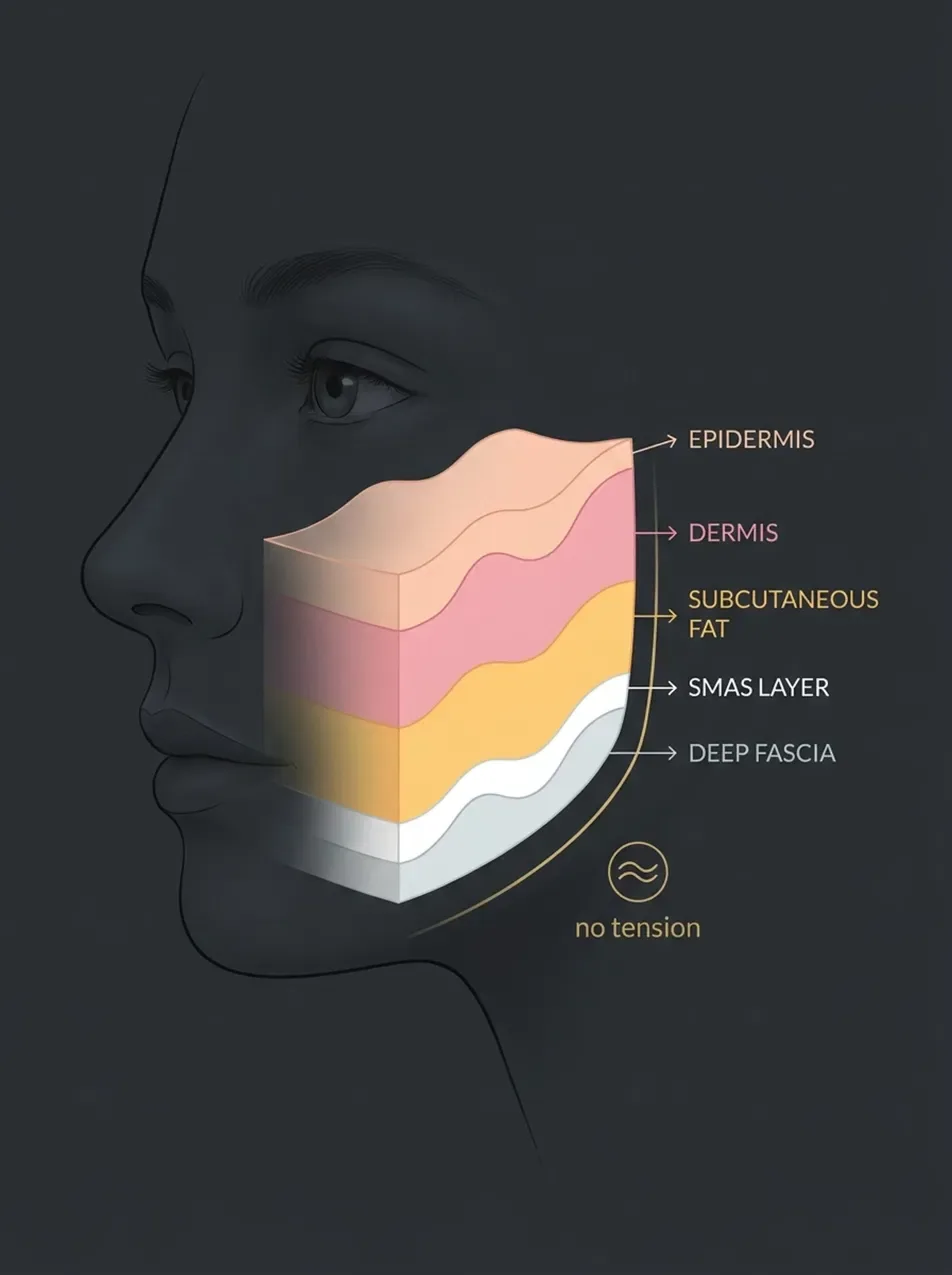
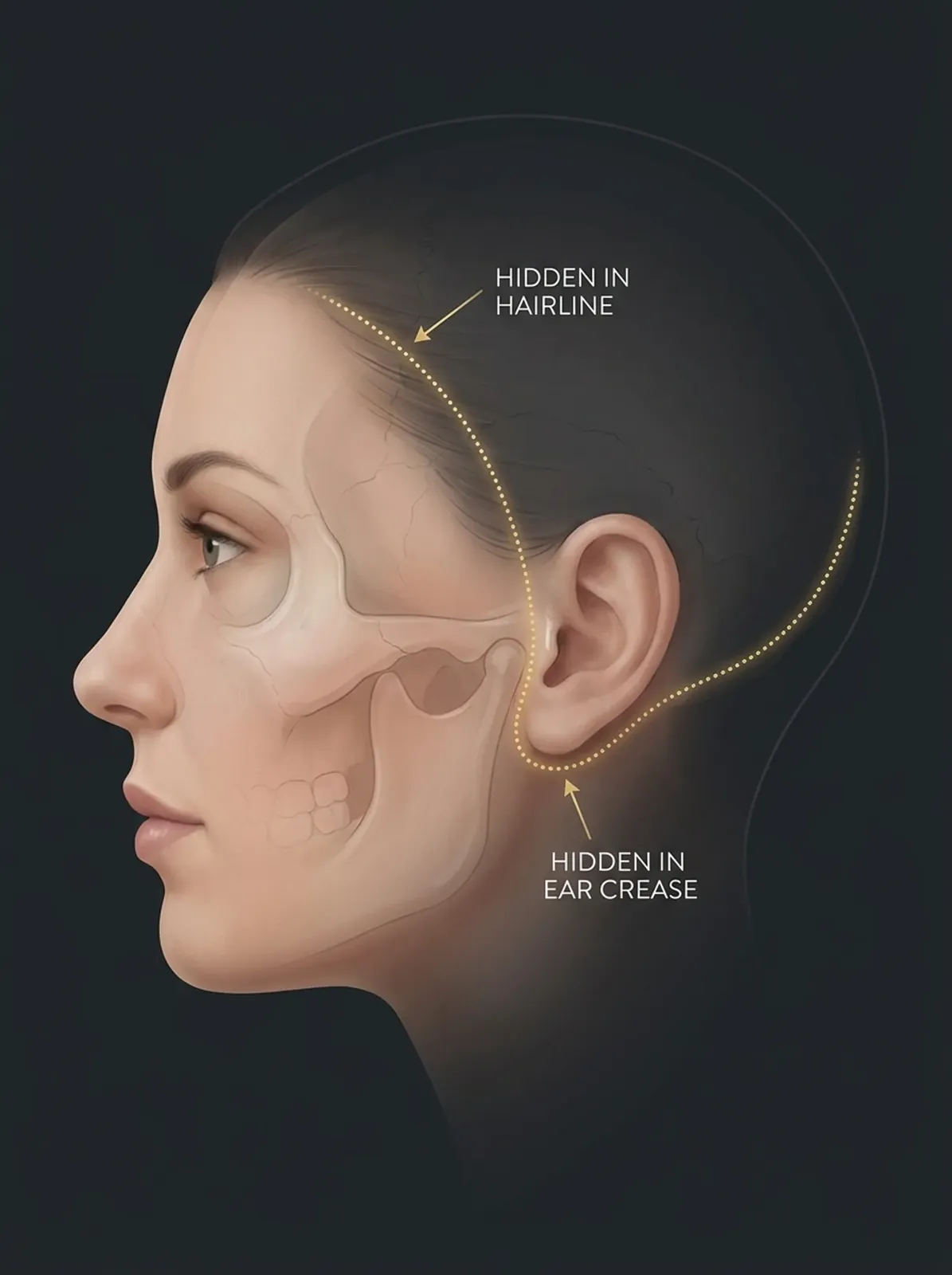
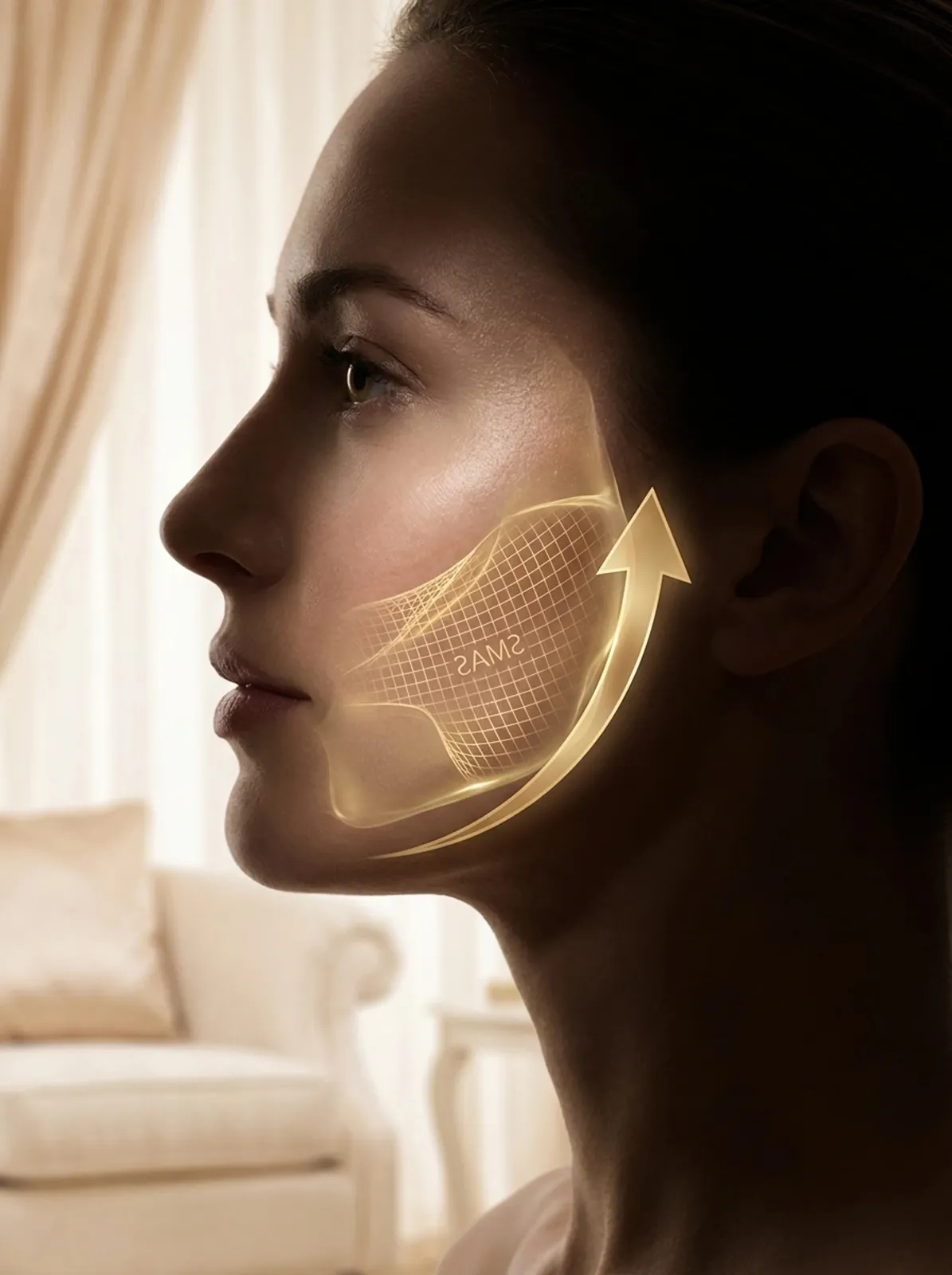
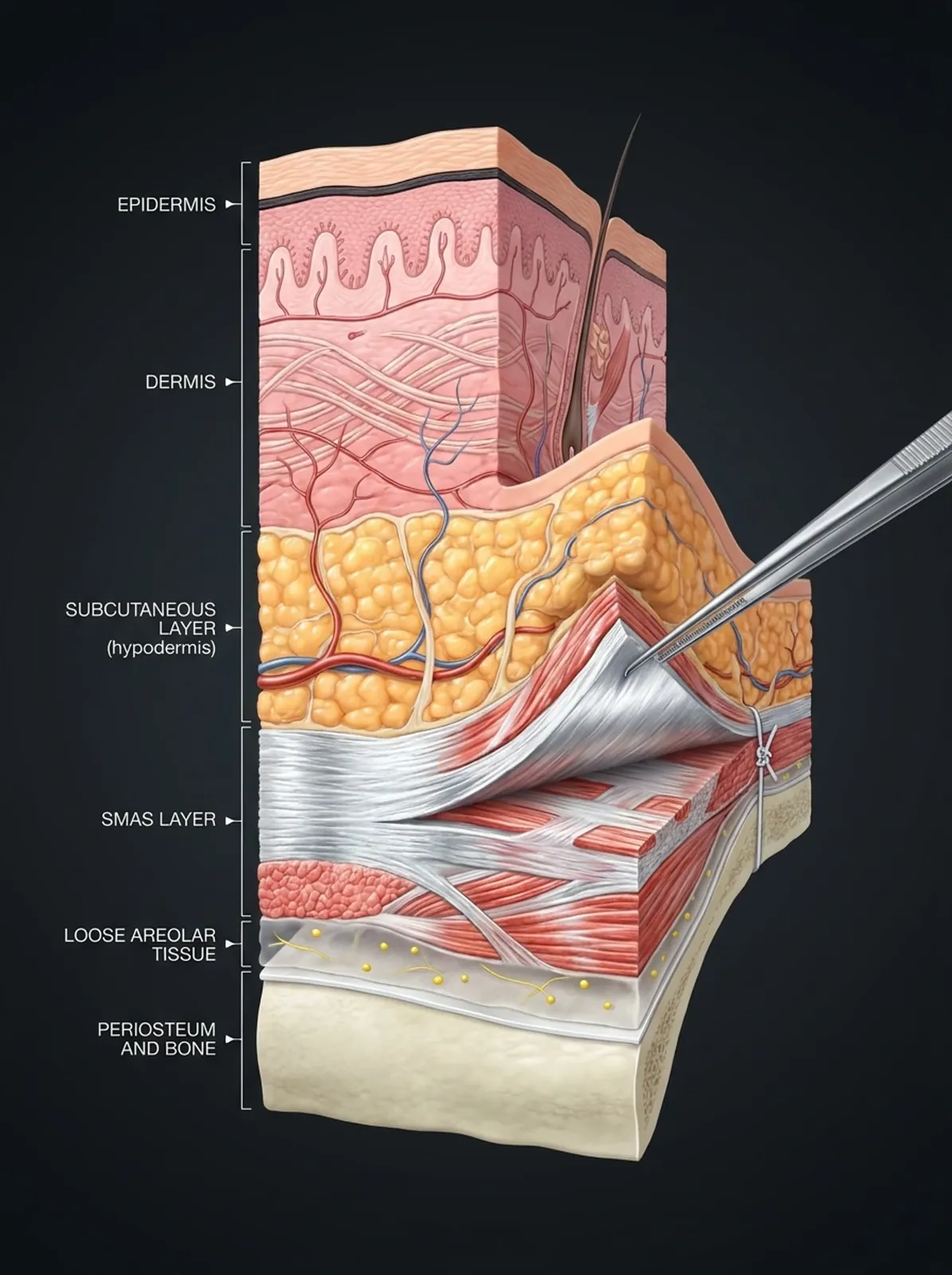
A surgical facelift addresses jowls, mid-face descent and a loosening neck by lifting the SMAS — the fibromuscular layer beneath the skin that carries the weight of the face. The deep layer is repositioned and secured, then the skin is re-draped without tension, so the correction is meaningful and long-lasting rather than a superficial tightening. Incisions follow the hairline and ear creases and settle to near-invisible over months.

Before & after

Before
After
Before
After
Before
After

Individual results vary; images are shared with patient consent.

Notice: To protect patient privacy, the images shown are based on photographs of actual patients; however, identifying features have been modified using AI retouching technology. These images are provided solely to aid understanding of surgical outcomes and may differ from actual photographs. Individual results may vary.

Methods & options

SMAS lift

The deep support layer is lifted and secured — the foundation of a lasting, natural facelift.

Longevity8–10 yearsLookNatural

Repositions the deep SMAS layer, fixed to the fascia — the skin itself is not pulled tight. Best for ages 45–60 with pronounced midface descent and a softened jawline. Aim: a lasting lift without a “mask” effect. Typically lasts several years, varying from person to person.

Mini lift

A shorter-scar lift for early jowling and mid-face laxity with a faster recovery.

DowntimeShorterScopeEarly change

Lifts only the superficial tissues, without touching the SMAS. Best for ages 35–50 with mild jowling and good skin elasticity. Result: a fresh, rested look. Lasts 5–7 years.

Face + neck lift

Combines facial lift with platysma tightening when the neck descends alongside the jaw.

FocusJaw + neckContourSharp

A combined face-and-neck lift correcting both the SMAS and the platysma. Best for ages 50–65 with marked facial and neck laxity. Aim: a clearer face and neck contour. Duration varies from person to person.

Comparing the three lifts

Mini lift
SMAS lift
Face + Neck lift
Essence
Lifts only the superficial tissues (skin + subcutaneous fat), without touching the SMAS
Lifts the deep SMAS layer, fixed to the deep fascia; the skin is not tightened
Combined face + neck lift correcting the SMAS and the platysma
Ideal candidate
35–50, slight oval descent and jowls, good elasticity, wants little downtime
45–60, pronounced cheek descent, deep nasolabial folds, lost oval, but the neck is still good
50–65, marked face + neck descent, platysmal bands, lost neck-chin angle
Depth
Superficial (~3.0–3.5 mm)
Deep (SMAS at 4.5 mm)
Deep + neck muscles (SMAS + platysma)
Treatment area
Lower third of the face (jowls, oval)
The whole face (cheeks, oval, nasolabial folds)
Face + neck (the full contour)
Neck correction
No
No (face only)
Yes (platysmaplasty, midline suture)
Incisions (scars)
Short, hidden behind the ear
Along the hairline and ear
Along the hairline + behind the ear + under the chin
When recommended
Early signs of ageing (30–45)
Moderate changes (45–60)
Marked face and neck changes (50+)
Result
A fresh, rested look
A lasting oval lift, with no “mask” effect
Full restoration of the face and neck contour
Longevity
5–7 years
7–10 years
10–15 years
Anaesthesia
Local / sedation
Local / sedation / general
Surgery time
60–90 min
120–150 min
150–180 min
Downtime (social)
1–2 weeks
2–3 weeks
3–4 weeks
Full healing
3–4 weeks
4–6 weeks
6–8 weeks
Sutures
Removed day 7–10
Removed day 10–14
Removed day 14
Swelling / bruising
Minimal, 7–10 days
Moderate, 2 weeks
Pronounced, up to 3–4 weeks
Goal
Refresh the face at an early stage
A long, natural facial lift
Rejuvenation of the face and neck

Every plan is confirmed in person — the table is a guide, not a rule.

Core values

Lift the layer that ages
01

Lift the layer that ages

We reposition the SMAS, not just the skin, so the result lasts for years.

Tension-free skin
02

Tension-free skin

Skin is re-draped without pull, avoiding the wind-blown, over-tight appearance.

Hidden incisions
03

Hidden incisions

Scars follow the hairline and ear creases and fade to near-invisible.

Precautions

  1. 01Sleep on your back with the head elevated for two weeks.
  2. 02Avoid strenuous exercise, saunas and alcohol for 3–4 weeks.
  3. 03Do not smoke — nicotine severely impairs skin-flap healing.
  4. 04Keep incision lines out of direct sun for several months.
  5. 05Attend all follow-ups for suture, drain and swelling management.

At a glance

Procedure time3–4 hours
AnesthesiaGeneral or deep sedation
Downtime2–3 weeks (visible)
Results settle3–6 months, lasting 8–10 years

Who should consider this

  1. 01Jowls and a softened jawline that make-up no longer hides.
  2. 02Mid-face descent with deepening folds around the mouth.
  3. 03Loose skin and banding across the neck.
  4. 04Anyone seeking a lasting result rather than temporary tightening.
Sangwon Lee, M.D., PhD.
Skin is a curtain; the SMAS is the rail it hangs from. Tighten only the curtain and it drops again — lift the rail and the face truly holds.

Sangwon Lee, M.D., PhD.

Board-Certified Plastic Surgeon

Daeyoung Kim, M.D., PhD.
Gravity is patient, but so am I. My work is not to fight time, but to quietly return what it borrowed.

Daeyoung Kim, M.D., PhD.

Board-Certified Plastic Surgeon

The process

01Consult

Analysis & consultation

Facial-proportion mapping and an unhurried 1:1 discussion of your concerns and goals.

02Design

Bespoke design

A plan drawn to your own anatomy and facial balance — never a template.

03Procedure

SMAS lift

The deep SMAS layer is repositioned and skin re-draped through hidden incisions under general or sedation.

04Care

Recovery & follow-up

Sutures out at 1–2 weeks, then scheduled reviews as swelling settles over months.

More about the surgery — FAQ

What is this surgery?

A surgical facelift lifts the SMAS — the muscular-fibrous layer that supports the face beneath the skin — to improve jowls, mid-face sagging and a loosened neck. The deep layer is repositioned and fixed, then the skin is redraped without tension, aiming for a lasting correction rather than a surface tightening. Incisions follow the hairline and the creases of the ear and settle to be inconspicuous over time.

When might you consider a consultation?

You might consider a consultation if jowls and a blurred jawline are no longer hidden by make-up, if mid-face sagging and deepening folds around the mouth bother you, or if loose skin and neck bands appear. The consultation is for those who want a lasting change rather than a temporary tightening.

What is assessed before surgery

The layer and location of sagging, skin elasticity, neck condition, general health and medications, and smoking are reviewed. These can change the suitable method, extent and expected recovery. Any previous lifting treatments or surgery are also reviewed.

Surgical methods

· SMAS lift: the deep SMAS layer is repositioned and fixed to the fascia while the skin itself is not pulled. It is mainly considered for clear mid-face sagging and a blurred jawline, with less of a “pulled” feel and a relatively long-lasting result.

· Mini lift: tidies the superficial tissue without working the SMAS much; considered for early jowls and relatively good skin elasticity. The incision is smaller and recovery relatively quicker.

· Face + neck lift: when the neck sags along with the jaw, the SMAS and the platysma are corrected together to address both the face and neck contour. Which method suits you is decided at the consultation by the extent of sagging.

The surgical process

In general: facial-proportion analysis and a one-to-one consultation → a design matched to your anatomy → SMAS repositioning and skin redraping through hidden incisions under sedation → recovery and follow-up. It takes about 3–4 hours under sedation, and you go home the same day.

Recovery

A drain and compression band are usually used for 1–2 days, and stitches are removed after about 7 days. Most people return to office work after about 3–5 days; the main swelling goes down over 1–2 weeks and residual swelling and tightness settle over about a month. The final result can take longer to stabilise, and the course varies between people.

Aftercare & precautions

For about two weeks, keep the head elevated and sleep on your back; for about 4 weeks avoid strenuous exercise, sauna and alcohol. Smoking can impair flap healing, so we advise stopping for about 4 weeks before and 4 weeks after surgery; hair colouring and perms are possible after about a month. Also, the incision lines should be kept out of direct sun for several months. Please attend all scheduled follow-ups for sutures, drainage and swelling care.

Possible side effects and risks

As with any surgery, a facelift carries possible side effects such as swelling, bruising, haematoma, infection, temporary numbness, scarring and asymmetry; their degree and course differ between people. It is important to be fully informed about the possible risks and how they are managed at the consultation.

How it differs from related procedures

A thread lift uses threads for a comparatively light lift with quicker recovery but addresses a different extent of sagging. A neck lift is considered when neck sagging is also treated. The suitability of each is judged at the consultation by the degree of sagging; see “Related content”.

What is a facelift?

A facelift repositions the deep support layer (SMAS) rather than only pulling the skin, improving jowls and mid-face and neck sagging. The method and extent differ with the degree and location of sagging.

How does it differ from a thread lift?

A thread lift lifts comparatively lightly with threads and recovers faster, but the extent of sagging it can address differs from a surgical facelift. Which suits you is judged at the consultation by the degree of sagging.

What kind of sagging suggests a consultation?

You might consider a consultation when jowls and a blurred jawline not hidden by make-up, mid-face sagging, loose skin or neck bands bother you. After assessing your condition, suitable options are discussed together.

How does recovery proceed?

Visible downtime is roughly 2–3 weeks, with stitches usually removed after 1–2 weeks. The result can take about 3–6 months to stabilise as swelling subsides, and the course varies between people.

Where are the scars located?

Incisions are designed to hide along the hairline and the creases of the ear and settle to be inconspicuous over time. How a scar matures varies between people and is best confirmed at the consultation.

Recommended for you

Get in touch

5F, 4 Sangmu-jungang-ro 28beon-gil, Seo-gu, GwangjuDirections & map apps
Booking & consultation062-227-3777
WeekdaysAM 09:30 – PM 06:30WeekendSaturday AM 09:00 – PM 03:00 (Lunch break 12:30–13:00)Closed Sundays and public holidays