Levator resection
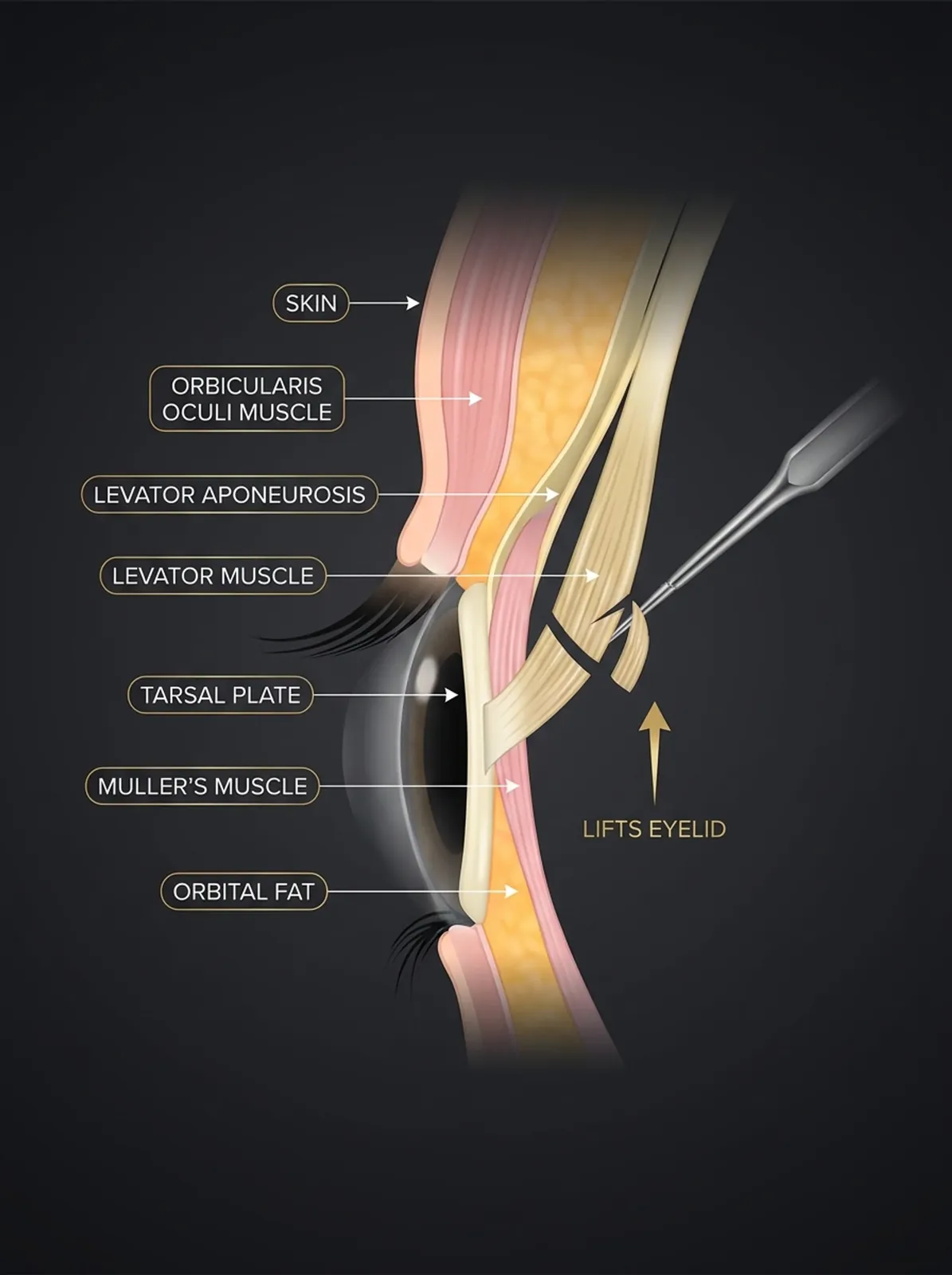
Shortens and strengthens the lifting muscle for reliable correction of moderate to severe ptosis.
StrengthReliableScopeModerate–severe
Eye Surgery
눈매교정
For eyes that look sleepy no matter how rested you are — we correct the muscle, not just the crease.
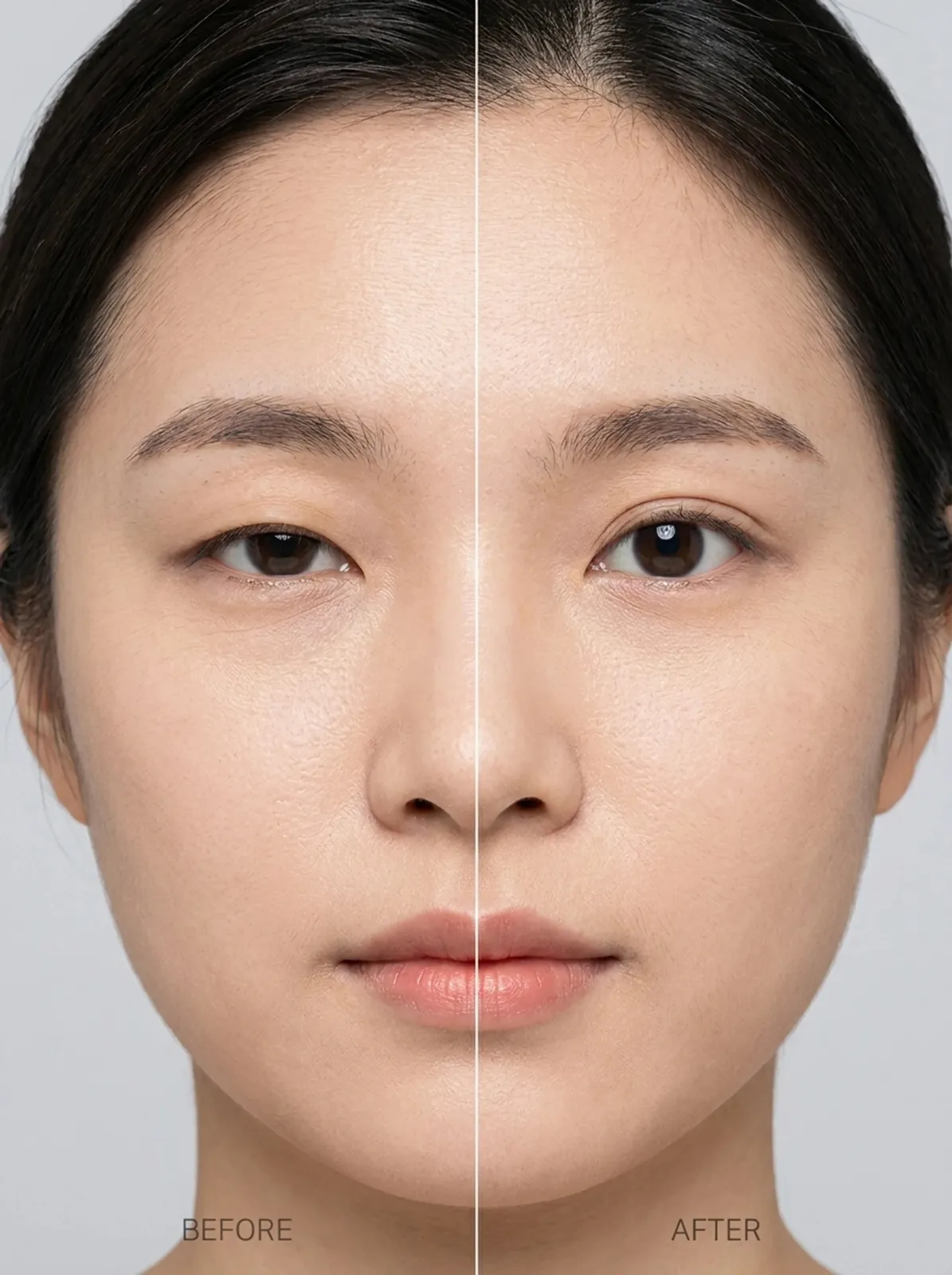
Ptosis is a weakness of the levator muscle that lifts the upper lid, leaving the eye looking drowsy and the pupil partly covered. Correction adjusts and reinforces this muscle so the lid opens to its proper height, often combined with double-eyelid design so the crease and the opening are balanced together. The gaze becomes brighter and more alert, and many patients stop unconsciously raising their brows to see — which softens forehead lines over time.
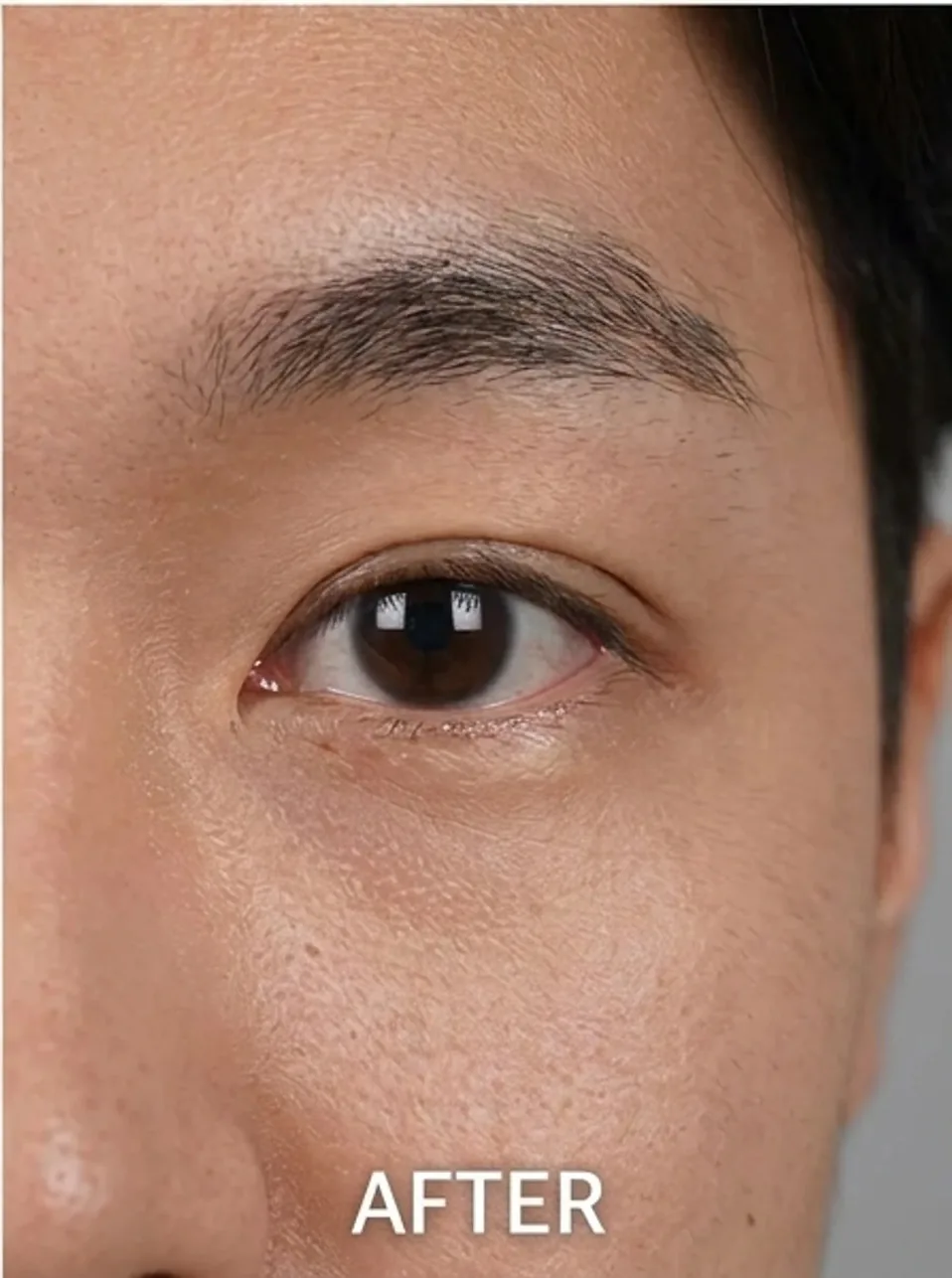
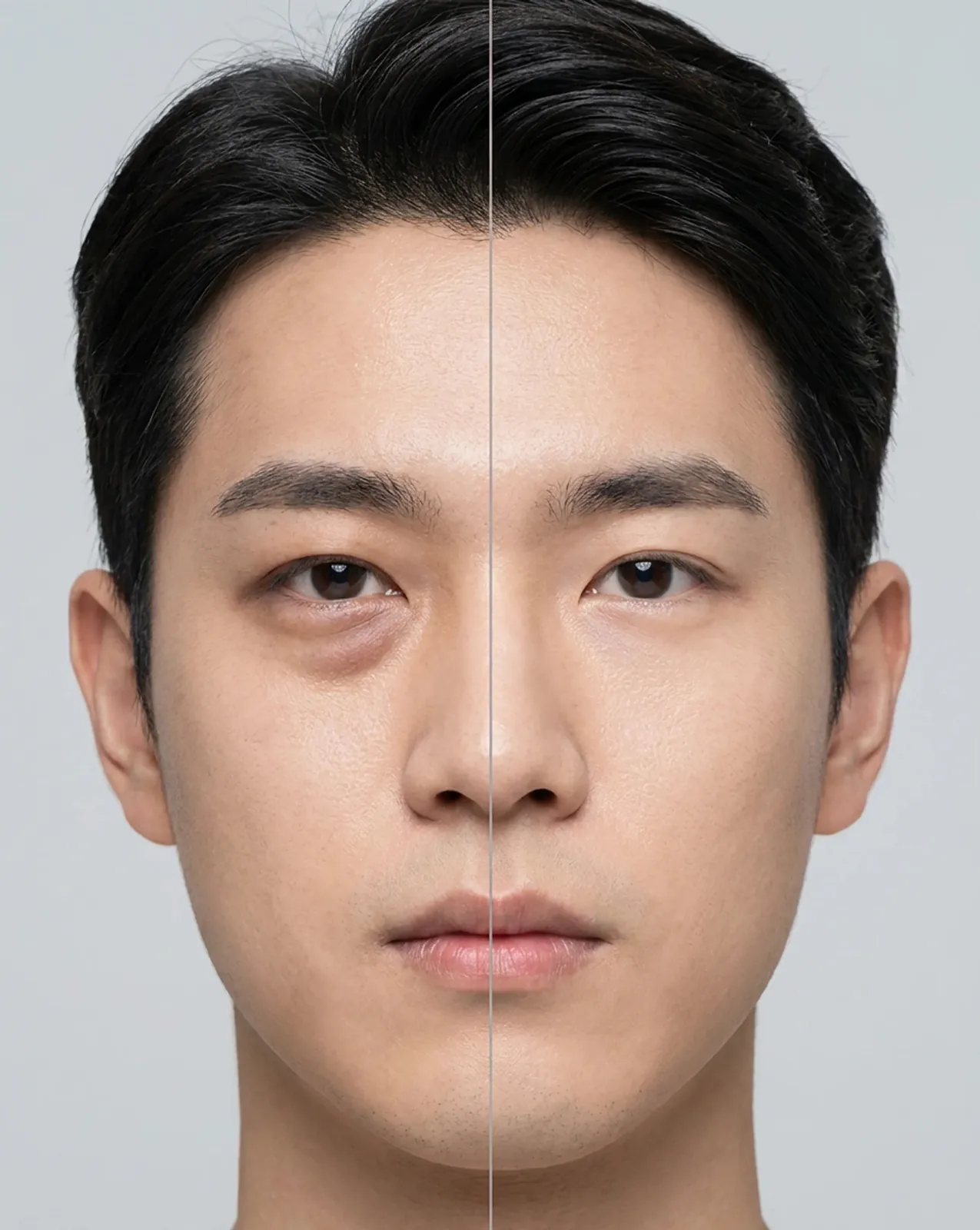
Individual results vary; images are shared with patient consent.
Notice: To protect patient privacy, the images shown are based on photographs of actual patients; however, identifying features have been modified using AI retouching technology. These images are provided solely to aid understanding of surgical outcomes and may differ from actual photographs. Individual results may vary.
Shortens and strengthens the lifting muscle for reliable correction of moderate to severe ptosis.
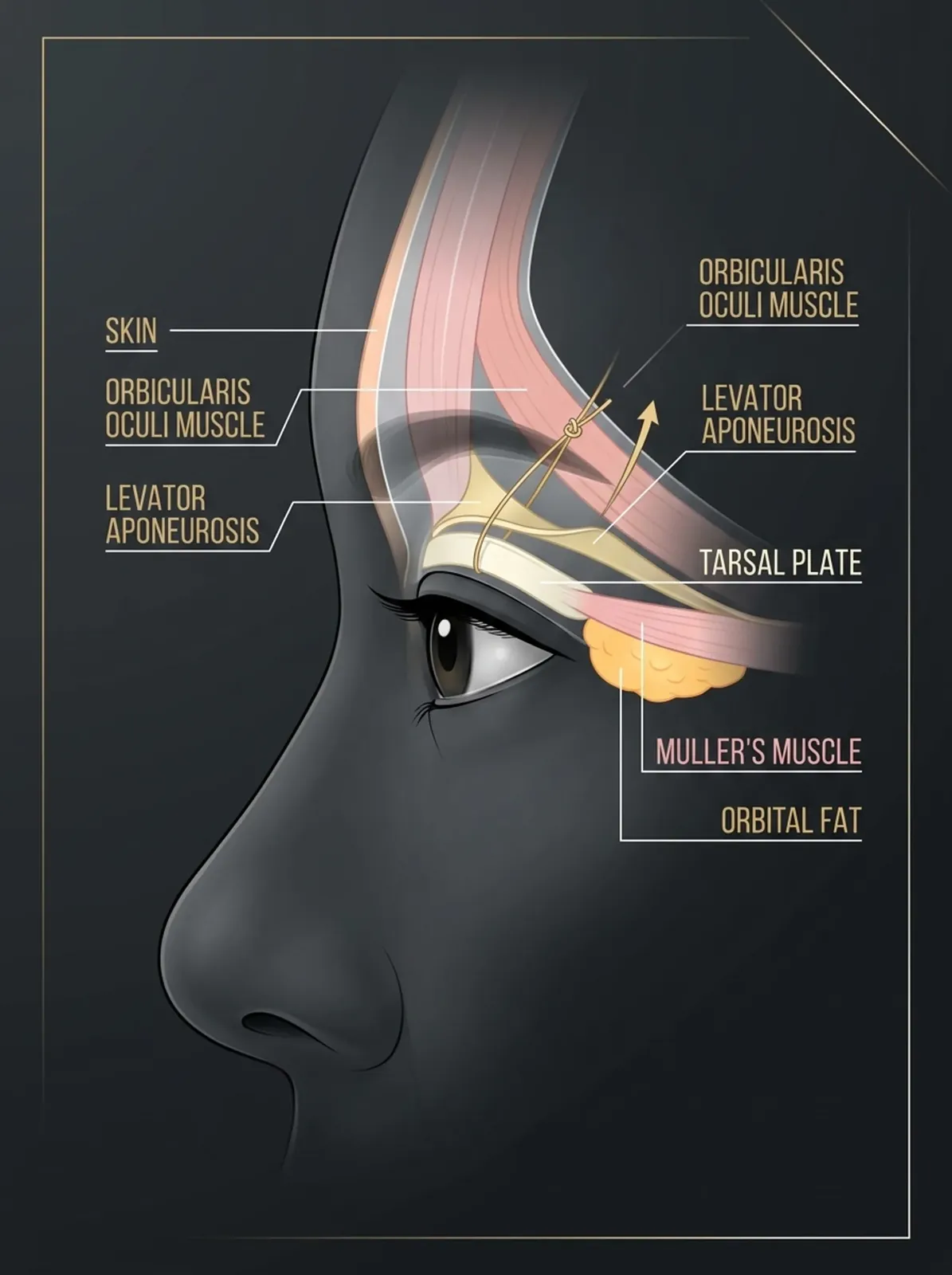
Fine repositioning of the muscle for subtle correction with natural lid movement.
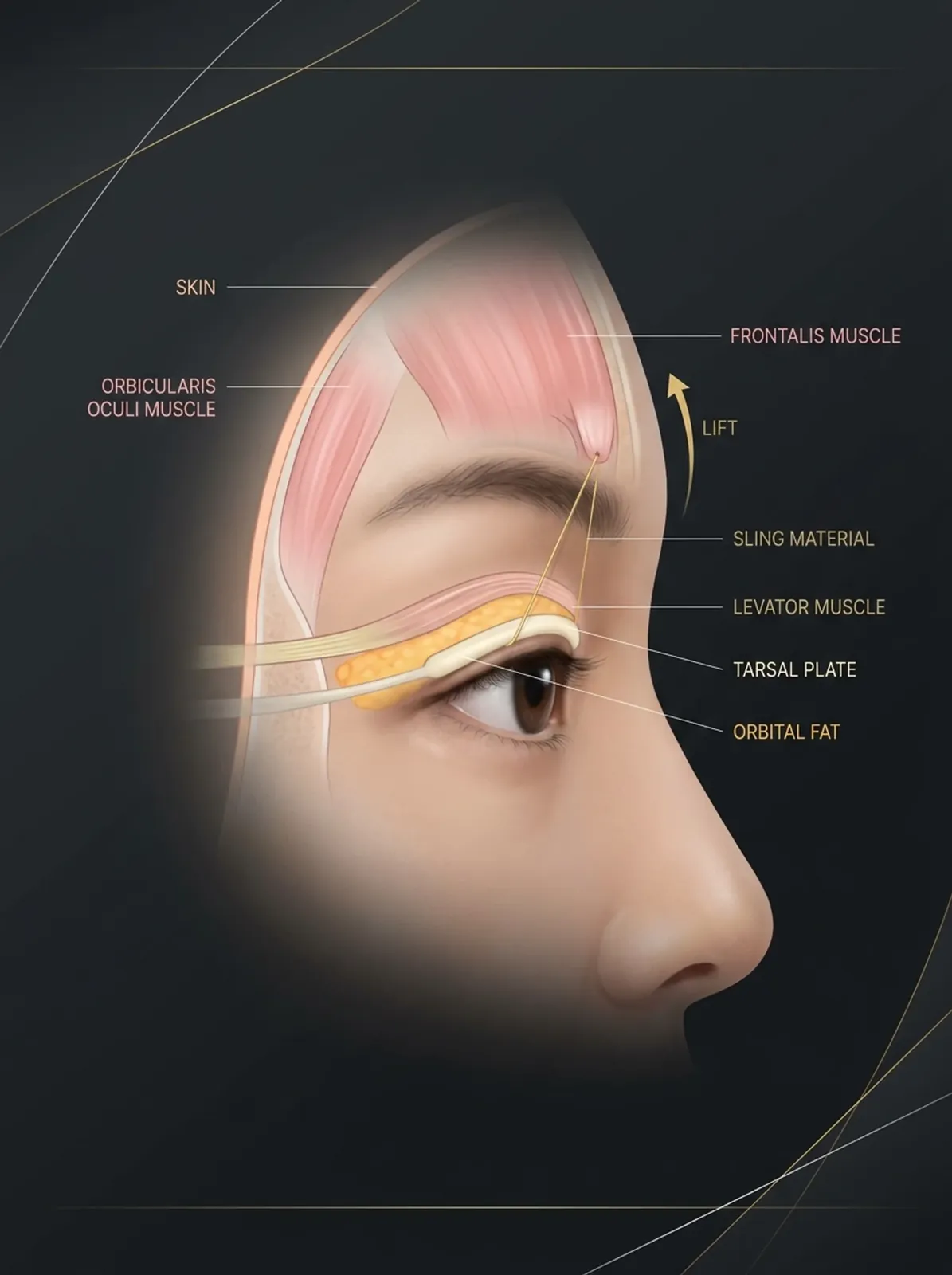
For severe ptosis with weak muscle, the lid is linked to the forehead lifter for support.
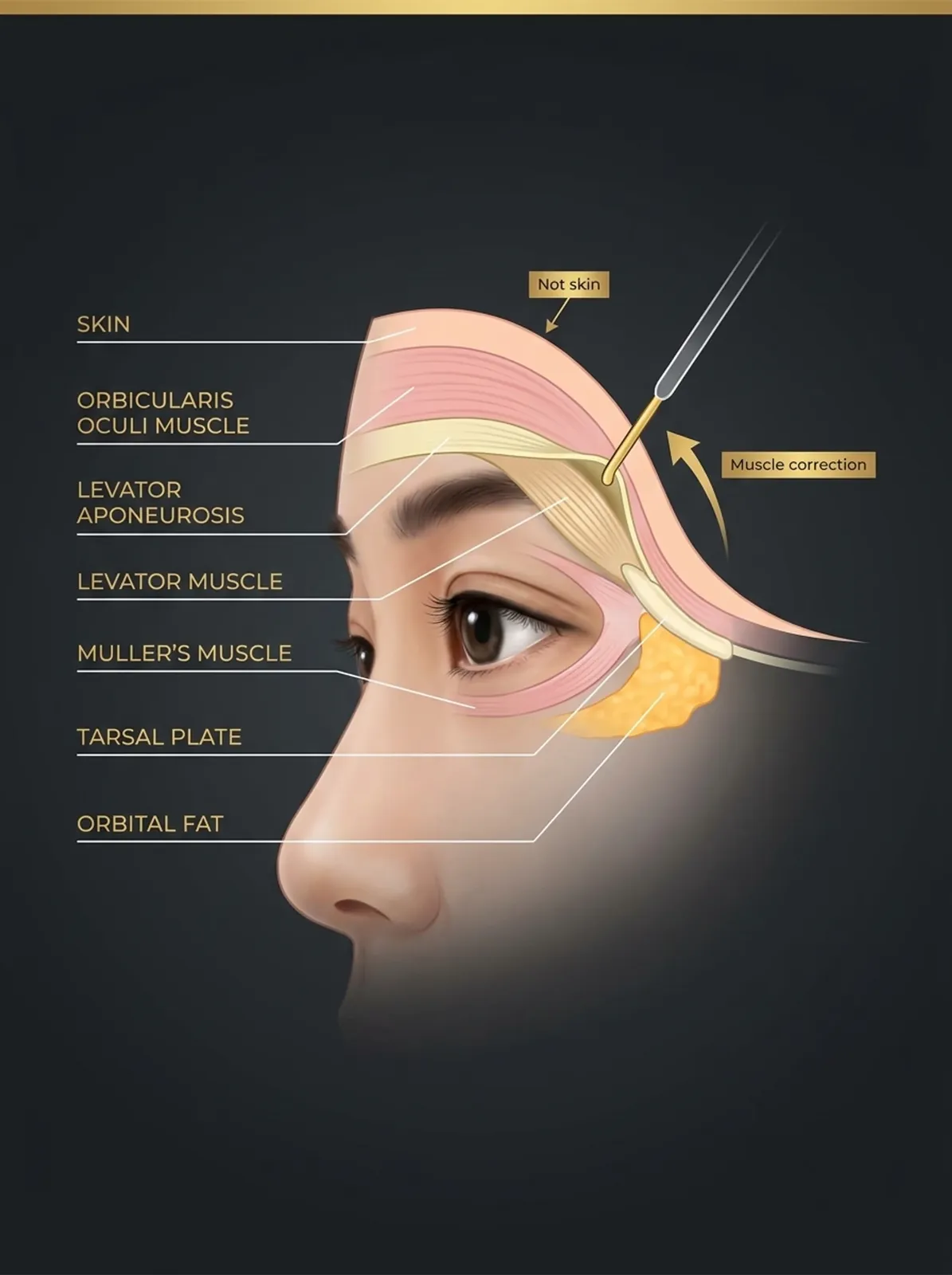
We correct the muscle so the eye truly opens — not just cosmetically re-crease it.
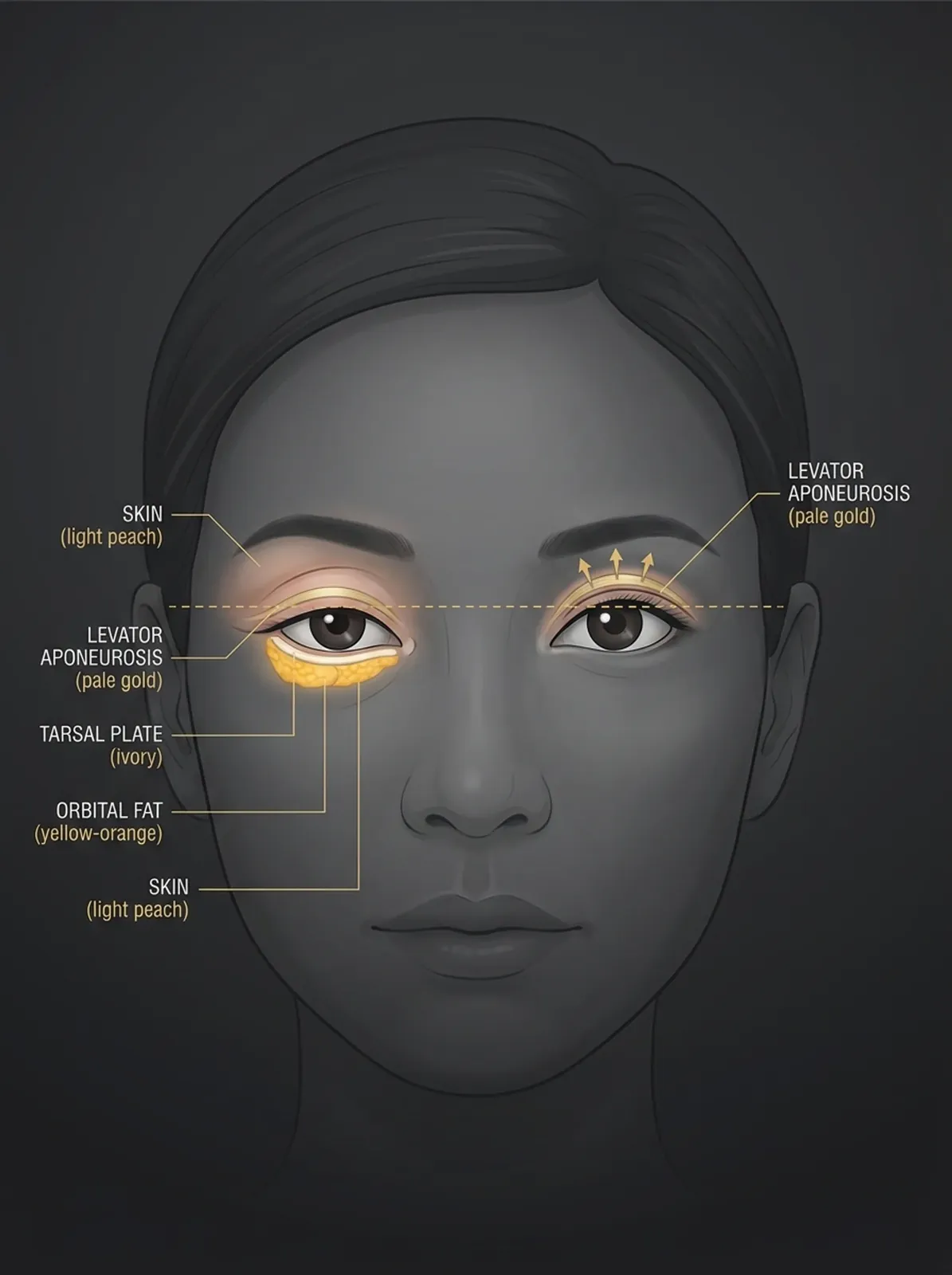
Both eyes are matched carefully so the opening height and crease sit level.
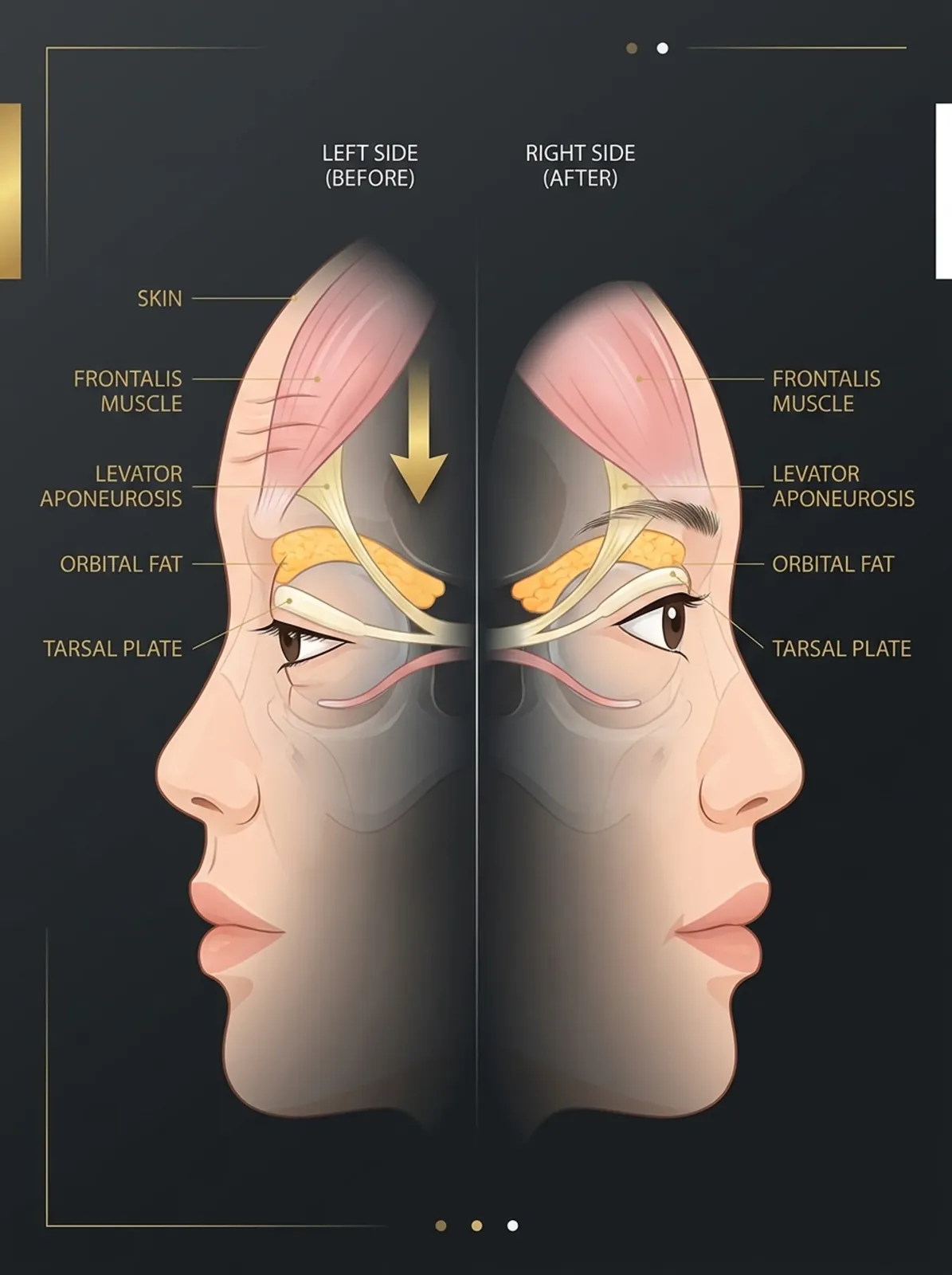
Restoring lid function lets the forehead relax, softening the lines raised to compensate.
| Procedure time | 50–80 minutes |
|---|---|
| Anesthesia | Local with light sedation |
| Downtime | 1–2 weeks |
| Results settle | 1–3 months |

Fatigue in the eyes is rarely fatigue at all — it is unheard muscle asking for help. I simply listen closer.
Daeyoung Kim, M.D., PhD.
Board-Certified Plastic Surgeon
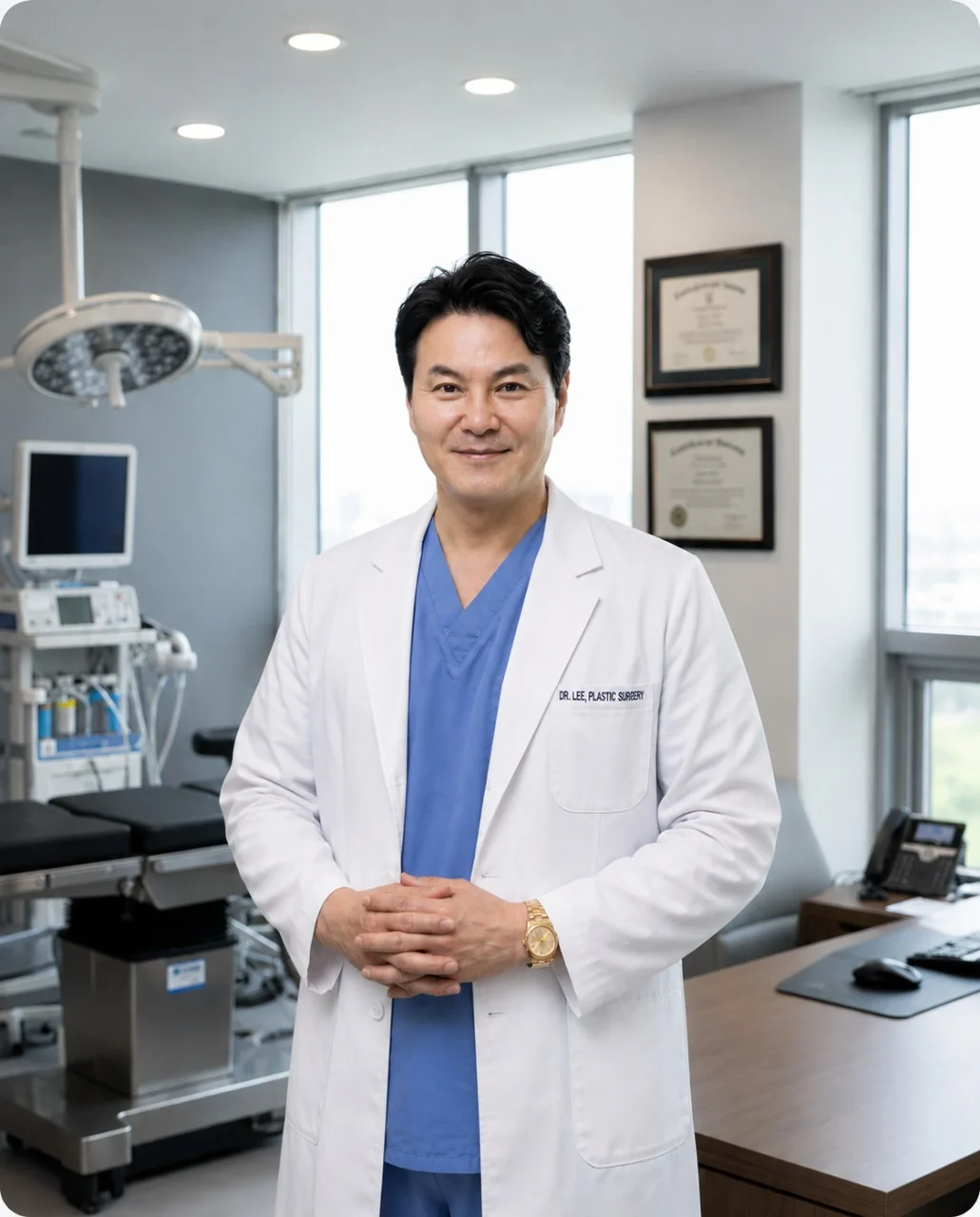
A tired-looking eye is often a muscle problem, not a skin one. Fix the mechanism and the whole face lifts — the brow finally rests.
Sangwon Lee, M.D., PhD.
Board-Certified Plastic Surgeon
Facial-proportion mapping and an unhurried 1:1 discussion of your concerns and goals.
A plan drawn to your own anatomy and facial balance — never a template.
The levator muscle is adjusted and reinforced under local anesthesia with sedation, often with crease design.
Scheduled reviews as swelling settles and the result matures.
Yes — ptosis correction adjusts the muscle that opens the eye, while double-eyelid surgery only forms the crease. They are often done together.
Symmetry is planned carefully and checked during surgery; minor differences during healing settle as swelling resolves.
Get in touch