Cejong

Rhinoplasty

A balanced nasal line designed around your face — refined projection and a natural bridge that reads as harmony, not surgery.

Rhinoplasty
Cejong Clinic content team

At a glance

Anaesthesia
Sedation
Surgery time
About 1 h 30 min
Hospital stay
Same-day discharge
Splint & stitches off
About 5–7 days
Back to daily life
About 2–7 days
Exercise
After about 4 weeks

Typical, approximate figures — they vary with each person and the extent of surgery. Your own schedule is explained at the consultation.

What should I check at a rhinoplasty consultation in Gwangju?

At a rhinoplasty consultation we review not only the shape you want but also your current nose height and length, skin thickness and nasal-tip cartilage structure. Because the suitable method and materials can differ with these factors, it is important to hear a full explanation before deciding.

Overview

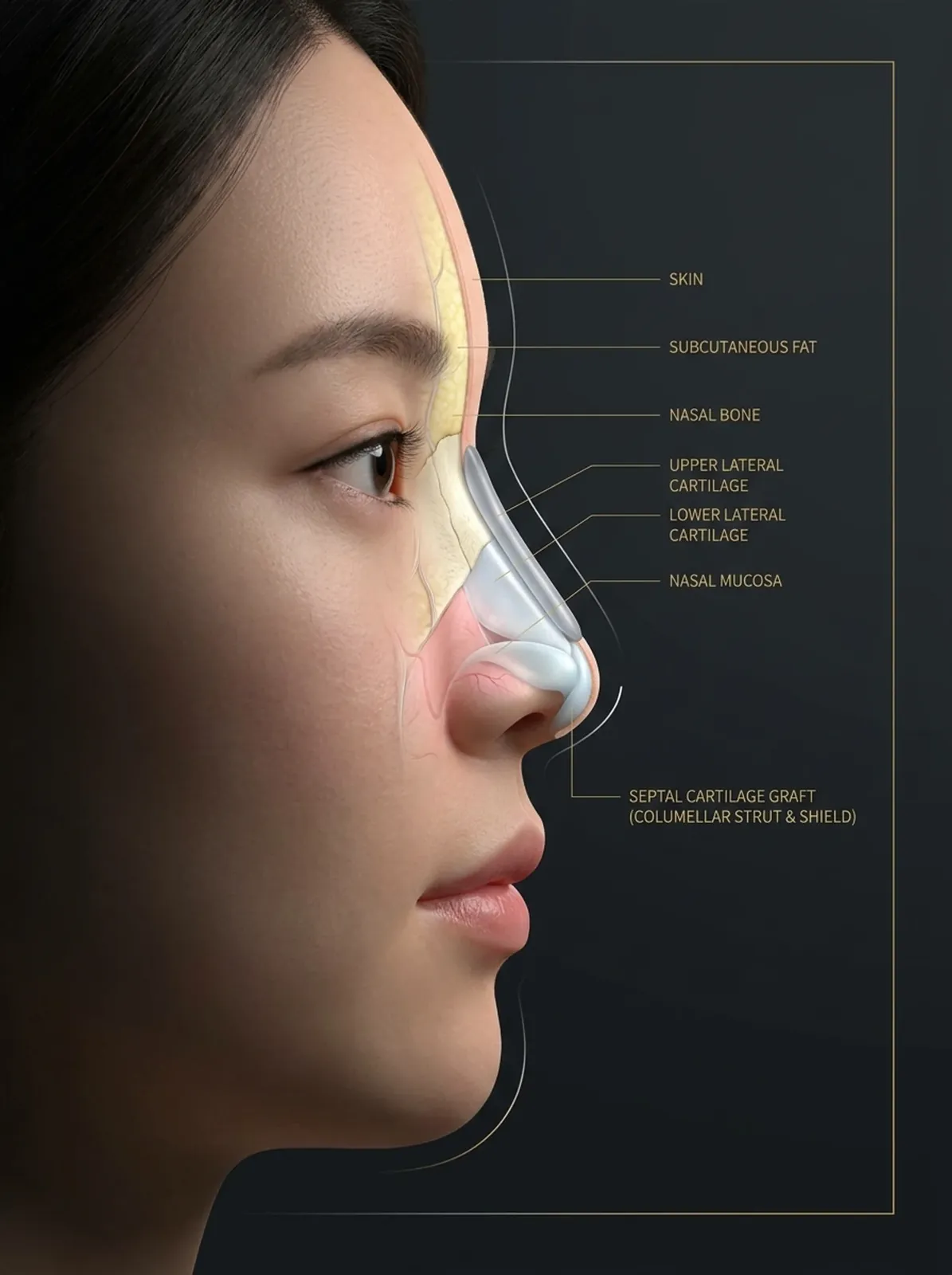
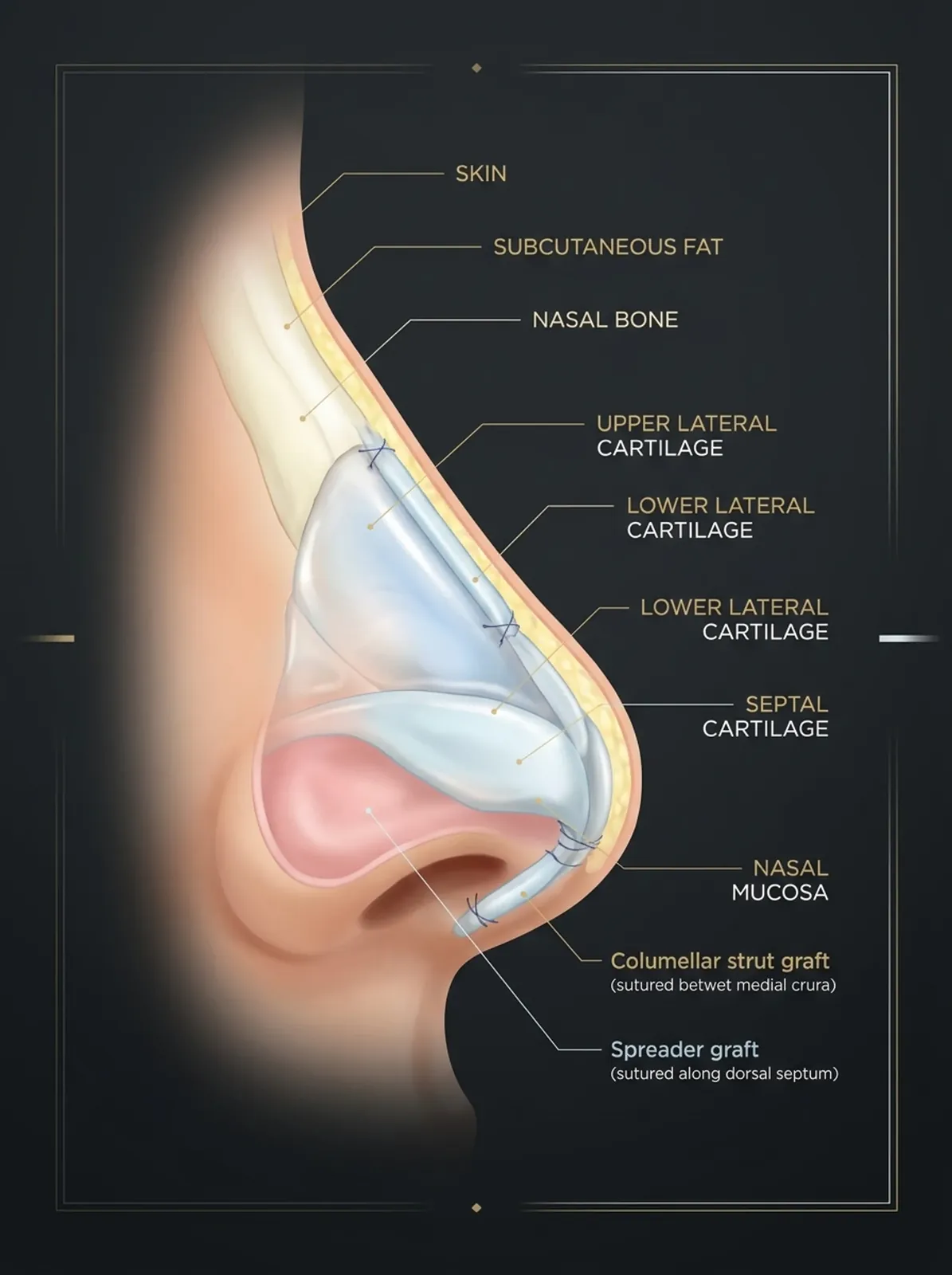
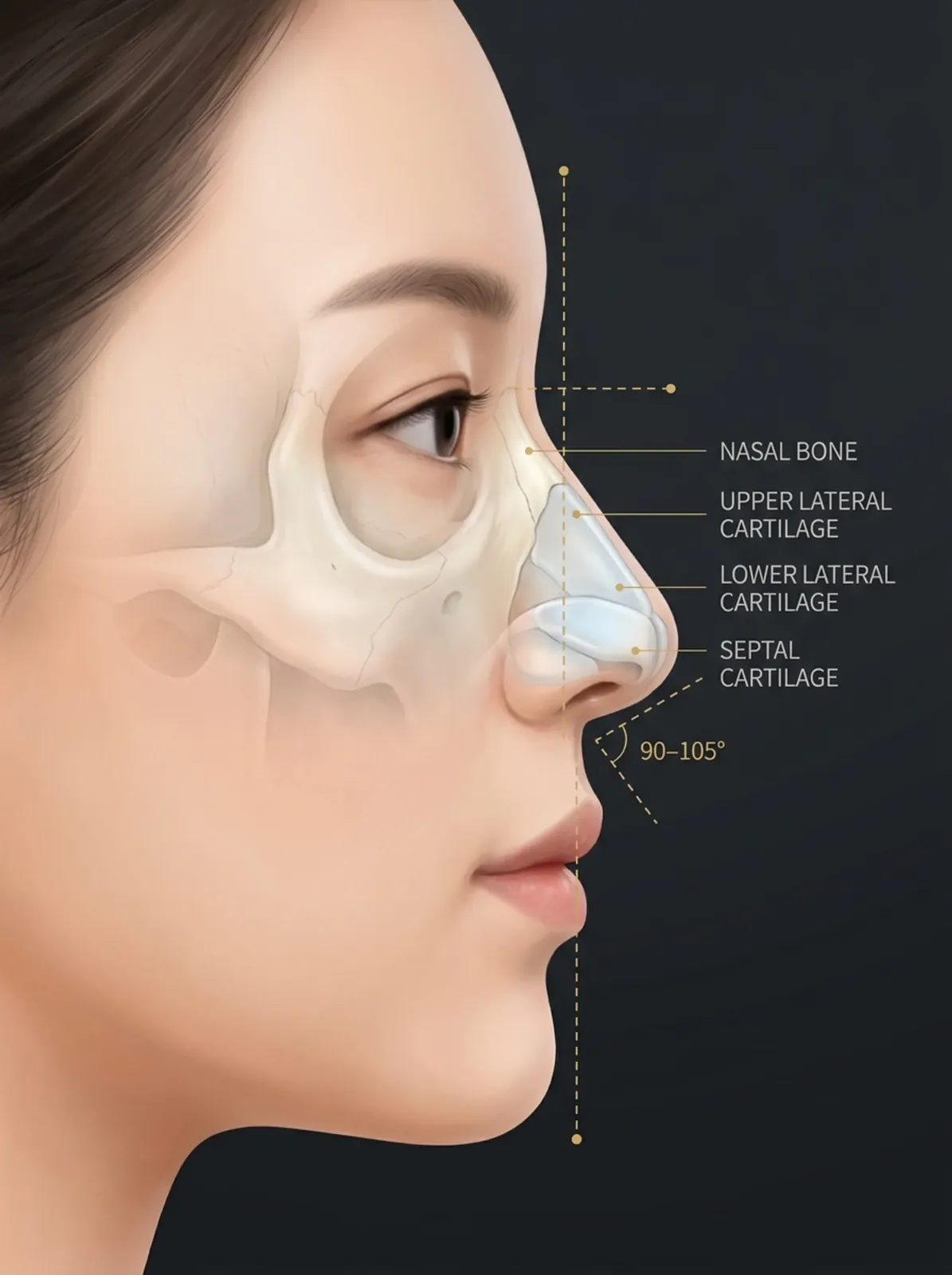
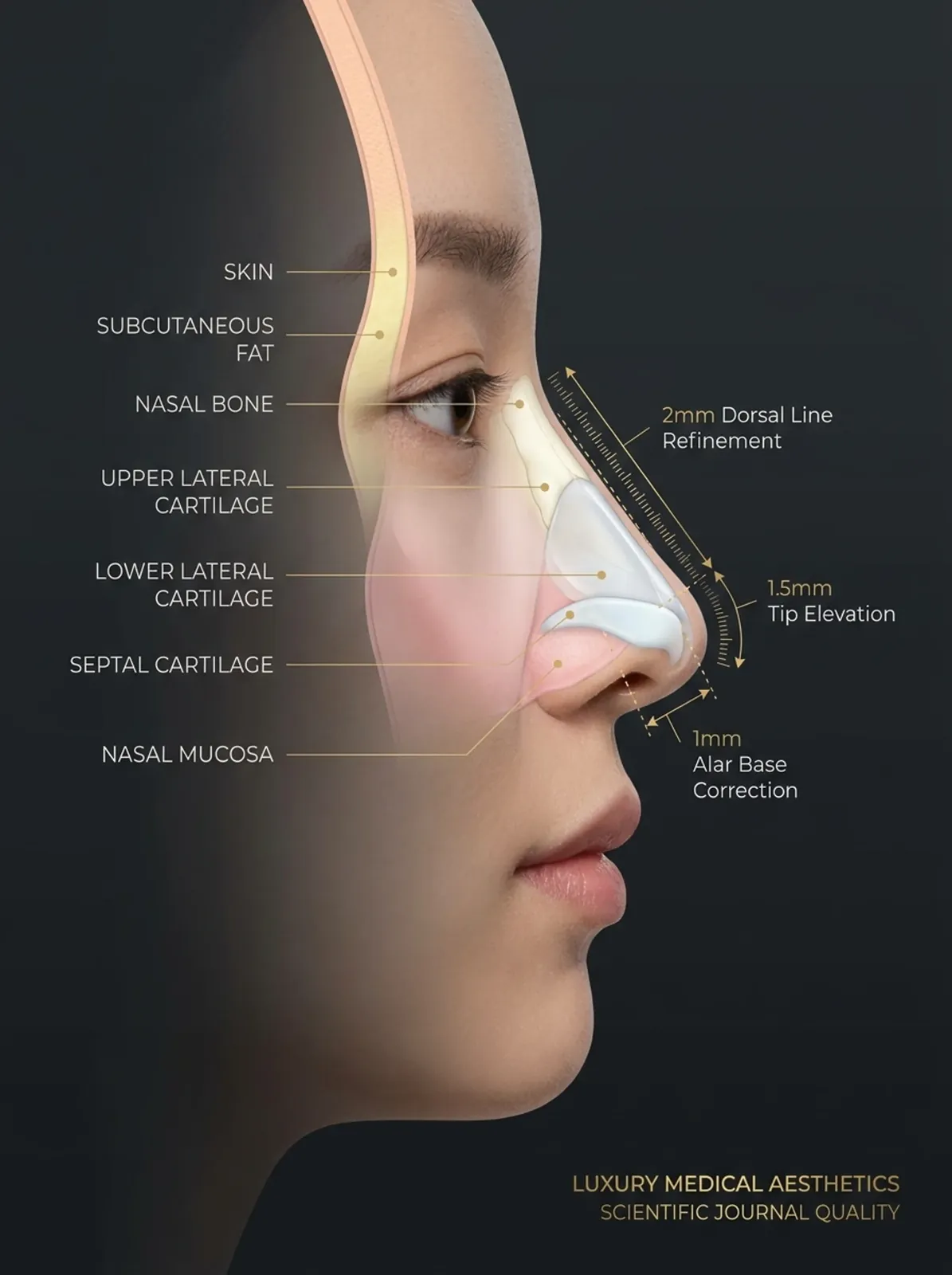
Rhinoplasty reshapes the bridge and tip of the nose to bring the central line of the face into proportion. Working through internal and columellar incisions, the structure is rebuilt with a combination of the patient's own cartilage and carefully selected implants, then refined so projection, rotation and width sit in balance with the forehead, eyes and lips. The goal is a nose that belongs to the face — stable over time and undetectable as work.

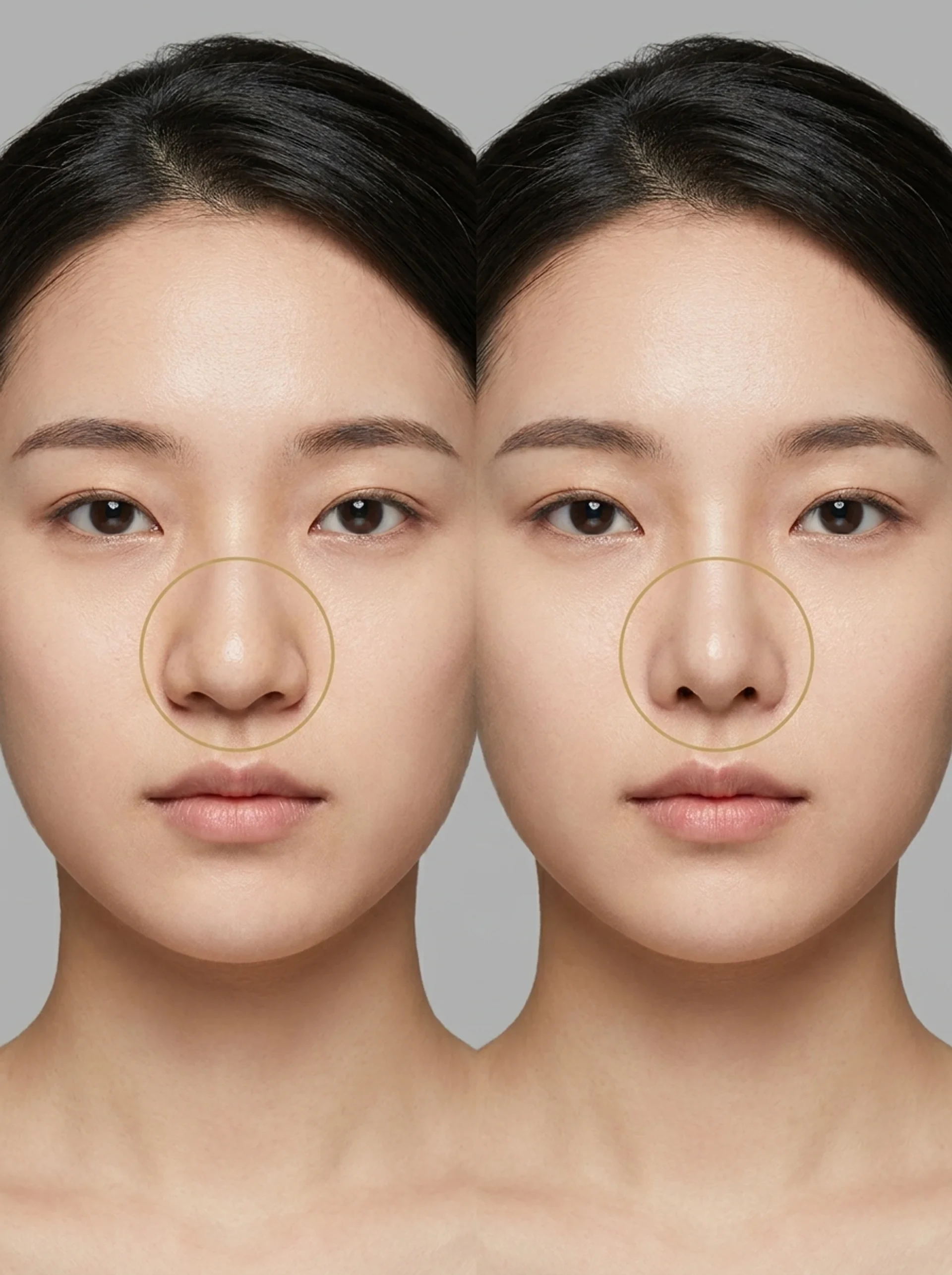
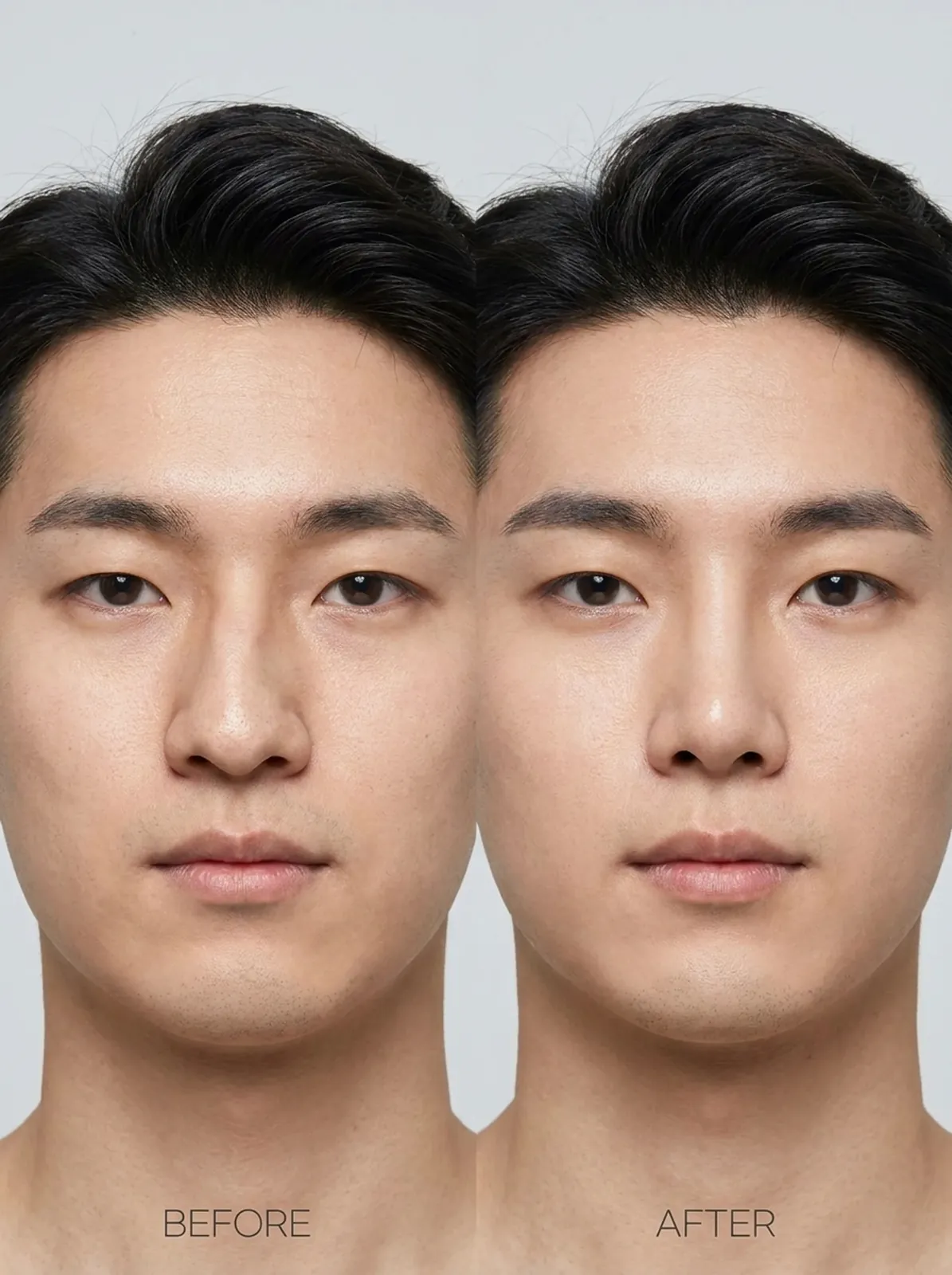
Before & after

Before
After
Before
After
Before
After

Individual results vary; images are shared with patient consent.

Notice: To protect patient privacy, the images shown are based on photographs of actual patients; however, identifying features have been modified using AI retouching technology. These images are provided solely to aid understanding of surgical outcomes and may differ from actual photographs. Individual results may vary.

Methods & options

Your own cartilage — a natural feel

Your own cartilage — a natural feel

We use your own cartilage (septum, ear or rib) to build a natural nasal contour. The tissue integrates well, resists shifting and gives a long-lasting, stable result — well suited to patients who want the most natural outcome.

Duration2–3 hoursRecovery2–4 weeksResultLong-lasting
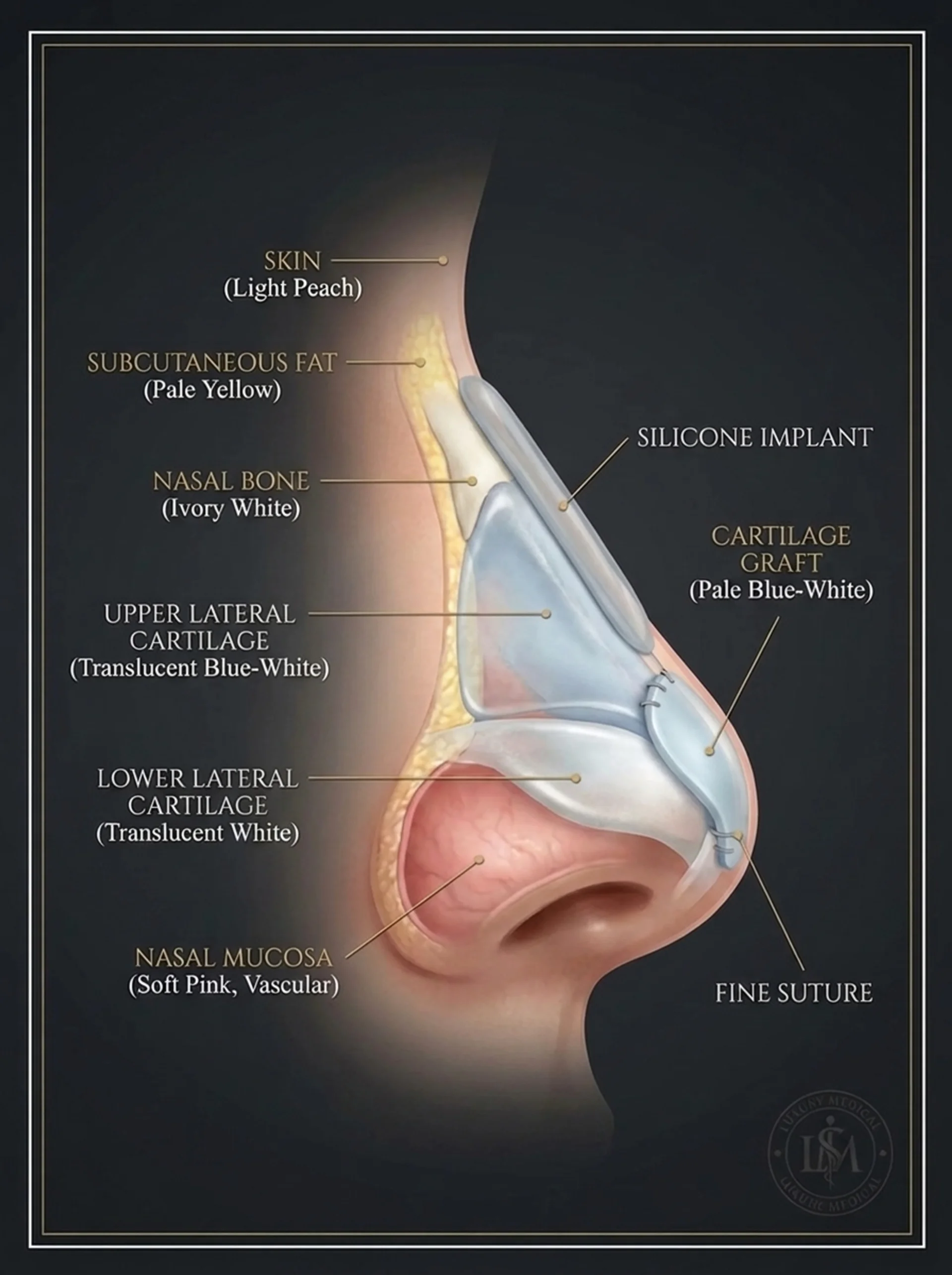
Silicone implant — a smooth bridge

Silicone implant — a smooth bridge

A soft medical-grade silicone implant forms an even, smooth bridge, while the tip is shaped with your own cartilage — lowering risk and keeping the result natural. A simple technique with a predictable outcome.

Duration1.5–2 hoursRecovery1–2 weeksResultLong-lasting
Combined method — a reliable balance

Combined method — a reliable balance

Silicone on the bridge plus your own cartilage at the tip — the most popular choice for Asian rhinoplasty. It combines the simplicity of an implant with the naturalness of cartilage for a stable, long-lasting result.

Duration2–2.5 hoursRecovery2–3 weeksResultLong-lasting

Core values

Structural stability
01

Structural stability

Every nose is rebuilt on a framework engineered to hold its line for decades, not months.

Facial harmony
02

Facial harmony

The nose is designed against your own proportions — never a template projection.

Undetectable result
03

Undetectable result

Refinement is measured in millimetres, so the outcome reads as you, rested and balanced.

Precautions

  1. 01Avoid glasses resting on the bridge for 4–6 weeks.
  2. 02Sleep on your back with the head elevated for the first week.
  3. 03Refrain from strenuous exercise and saunas for 3–4 weeks.
  4. 04Do not smoke — nicotine impairs healing of the reconstructed tissue.
  5. 05Attend all follow-up visits so swelling and shape are monitored.

At a glance

Procedure time1.5–2 hours
AnesthesiaSleep sedation or local
Downtime5–7 days (splint removal)
Results settle3–6 months, lasting

Who should consider this

  1. 01A low or flat nasal bridge that unbalances the profile.
  2. 02A bulbous, drooping or under-projected tip.
  3. 03A deviated nose or breathing difficulty alongside cosmetic concerns.
  4. 04Revision of a previous rhinoplasty with contracture or asymmetry.
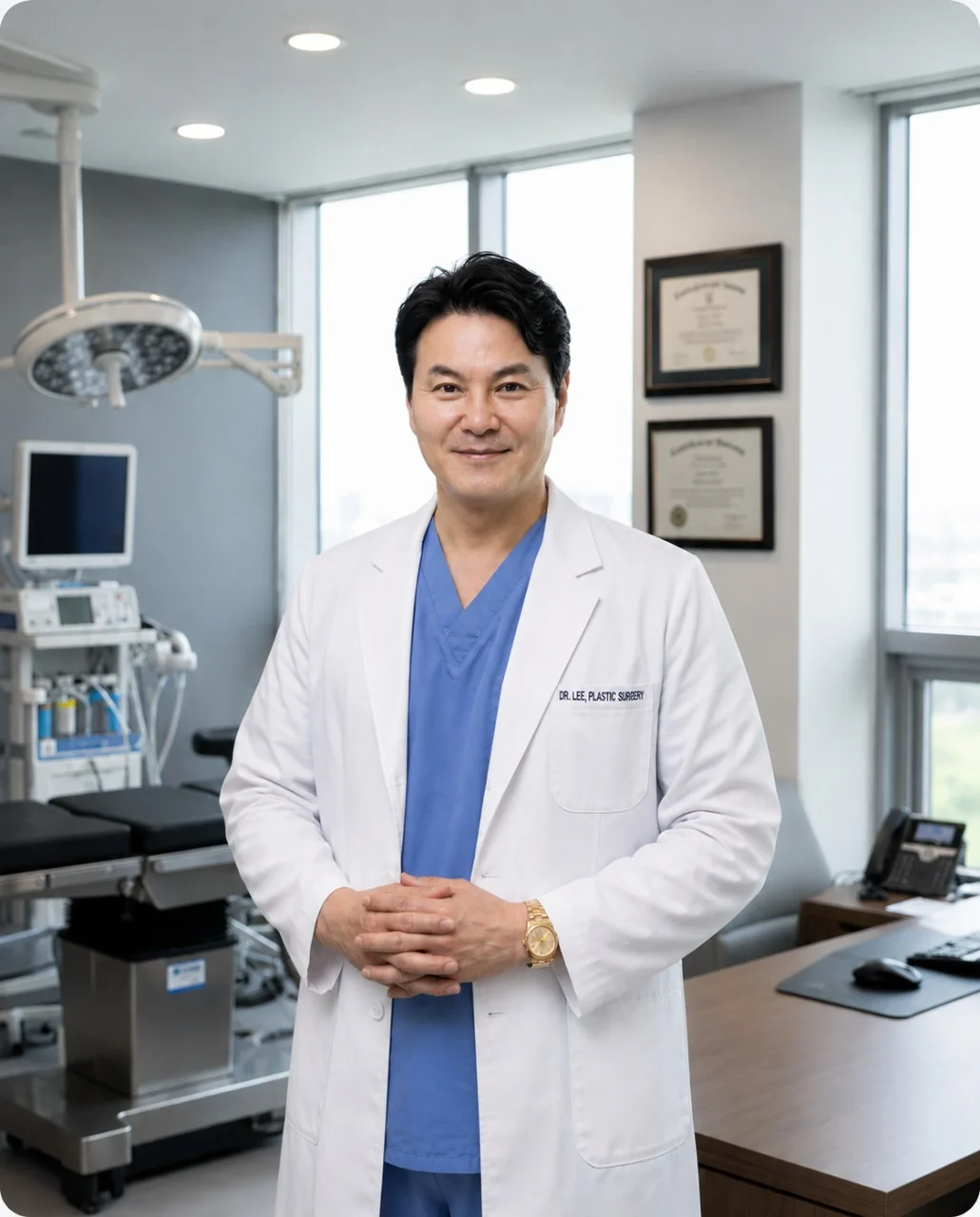
Sangwon Lee, M.D., PhD.
A nose is not a feature to add — it is the axis the whole face turns around. I design each one to disappear into balance.

Sangwon Lee, M.D., PhD.

Board-Certified Plastic Surgeon

Daeyoung Kim, M.D., PhD.
The nose sets the rhythm of a profile. My goal is never to redesign it, but to let it finally agree with the rest of the face.

Daeyoung Kim, M.D., PhD.

Board-Certified Plastic Surgeon

The process

01Consult

Analysis & consultation

Facial proportion mapping and 1:1 discussion of your concerns and goals.

02Design

Bespoke design

A nasal line drawn to your bone structure, skin and facial balance.

03Procedure

Surgery

Structure built with cartilage and implant under sleep or local anesthesia.

04Care

Recovery & follow-up

Splint removal at one week, then scheduled reviews as swelling settles.

More about the surgery — FAQ

What is this surgery?

Rhinoplasty is surgery that adjusts the height, length, tip shape and bridge line of the nose so it harmonises with the rest of the face. Even within “rhinoplasty”, raising a low nose, correcting a deviated or humped nose, and refining the tip each call for a different approach.

When might you consider a consultation?

You might consider a consultation if your nose is low or the bridge is deviated, if a hump or a bulbous shape bothers you, or if the tip looks blunt or upturned. The consultation starts by assessing your current condition and discussing whether surgery is appropriate or whether other options exist.

What is assessed before surgery

Skin thickness, the strength and shape of the tip cartilage, the septum, and any history of previous nose surgery are reviewed. These conditions can change which methods and materials are usable and the expected recovery. The consultation also checks functional problems such as rhinitis or a blocked nose, and the proportion and symmetry of the whole face.

Surgical methods

Rhinoplasty can use the patient's own cartilage (ear, septum and so on) and/or an implant, and different materials are sometimes combined for the bridge and the tip. Which method suits you is decided at the consultation according to your nose structure and goal. At Cejong, silicone is used as the implant and the patient's own septal, ear or rib cartilage as autologous material; which is used depends on the nose.

The surgical process

In general it proceeds as consultation and design, anaesthesia, surgery and recovery. The type of anaesthesia, the length of surgery and whether a stay is needed depend on the extent of surgery and the individual. At Cejong it is done under sedation, usually takes about 1 hour 30 minutes, and you go home the same day.

Recovery

After surgery, swelling and bruising ease gradually over time, and the shape settles over a period. When the splint and stitches are removed, and when you can return to daily life, washing and exercise, varies from person to person. The splint and stitches are usually removed about 5–7 days after surgery; washing and light daily activity resume after about 2–7 days, and exercise after about 4 weeks.

Aftercare & precautions

During recovery, avoid impact and pressure on the nose and adjust glasses-wearing, washing and sauna as advised. Smoking, alcohol and some medications can affect recovery, so confirm these at the consultation. We generally advise avoiding smoking for about 2–4 weeks, and alcohol, sauna and strenuous exercise for about 4 weeks. Glasses can be worn over the splint.

Possible side effects and risks

As with any surgery, rhinoplasty carries possible side effects such as swelling, bruising, infection, asymmetry and implant-related issues, and their degree and course differ between people. It is important to be fully informed about the possible risks and how they are managed at the consultation.

How it differs from related procedures

Tip-plasty focuses on the shape of the tip, while hump correction focuses on a protruding bridge. If you have had nose surgery before, revision rhinoplasty takes a different approach, and the suitability of each is judged at the consultation based on your current nose. You can see each page under “Related content” below.

What is checked at a rhinoplasty consultation?

Along with the shape you want, we check your current nose height and length, skin thickness, tip-cartilage structure and septum. Because the suitable method and materials depend on these, hearing a full explanation at the consultation is important.

How is the rhinoplasty method decided?

The method and materials for the bridge and tip are chosen by considering the nose structure, skin condition, the change you want and the goal of surgery together. Even for the same concern, the choice can differ with each person's condition.

How do a bulbous nose and tip-plasty differ?

A bulbous nose describes a tip that looks round and wide, while tip-plasty refers to surgery that refines the shape and height of the tip. Correcting a bulbous tip can fall within tip-plasty, so the approach is set by the current state of the tip.

When can I consult about revision rhinoplasty?

The timing for a revision consultation depends on when tissue stabilises after the previous surgery and on your current nose. The consultation reviews what was done before together with your current condition. The timing is decided individually by age and current condition, and we also check whether any foreign substance was ever injected.

How does swelling change after rhinoplasty?

Swelling is most noticeable right after surgery and then eases gradually; some areas, such as the tip, can take longer to settle. The course varies from person to person. The main swelling usually goes down over 1–2 weeks; finer swelling, for example at the tip, lasts longer and settles gradually.

What should I be careful about after rhinoplasty?

During recovery, avoid impact and pressure on the nose and adjust glasses, washing and exercise as advised. If anything unusual appears, it is best to contact the clinic rather than judging it yourself.

Recommended for you

Get in touch

5F, 4 Sangmu-jungang-ro 28beon-gil, Seo-gu, GwangjuDirections & map apps
Booking & consultation062-227-3777
WeekdaysAM 09:30 – PM 06:30WeekendSaturday AM 09:00 – PM 03:00 (Lunch break 12:30–13:00)Closed Sundays and public holidays